Finding Gold in My Story

snow


A weekend in the mountains sounds restful, but for the twenty five writers that attended the Southern California Society of Children’s Book Writers and Illustrators Spring Retreat in Idyllwild, it turned out to be three days of hard work. The focus was on middle grade and young adult works in progress, which placed me in the company of my genre peers, rather than in the mixed company of most critique groups I had attended.

For me it was the last effort I was willing to extend toward a project I had been writing for three years. A book that I had thought I had finished, but had been quietly rejected by agents for the past two years. The College of the Crones had sat unloved in my document files, while my creative nonfiction articles were getting snapped up by travel journals. The first time I’d thought the book was finished, I spent worthwhile money on professional editing. I had even pitched my book to an agent at a writing conference, and took her advice to heart, getting rid of one of my main characters. But I was tired of working without result. The title of the retreat was “Finding Gold,” but I wasn’t sure that my book had anything valuable left.

The dream team of masterminds behind the weekend included Heather Buchta, who organized a group of writers who mostly had never met each other into focused critique groups. A few weeks before I headed up the mountain, Heather emailed our group with a request to share our photo and synopsis of the work we were planning to share. This proved to be brilliant, as we knew who to look for when we arrived. Also we didn’t have to spend a lot of time getting our group up to speed on our stories.

Although I had attended previous writing conferences, this one proved to be the most productive. We had four sessions of critiques with our small group of six and our leader. In addition, an agent, editor, or published author would also sit in with us. Each writer had fifteen minutes during each session to use as they wished, timed by our leader. Some writers read different chapters each session, while others took the feedback and revised the same passage, printing out copies for the group on the printers that some of the leaders brought with them.

Between critique sessions, Kate Sullivan, senior editor at Delacorte Press, and Erin Young, agent at Dystel, Goderich and Bourret, gave brief, useful presentations on theme, query letters, and pitches. Estelle Laure and Steve Bramucci, published authors, told their tales about being in the trenches as writers. These session drew laughs as well as tears, and plenty of “ah-ha!” moments.

But I will always treasure Kate and Estelle contributing to my critique group. They set a high bar for courtesy and professionalism. And I will never forget the passion and meticulous attention they showed toward my manuscript. Priceless.

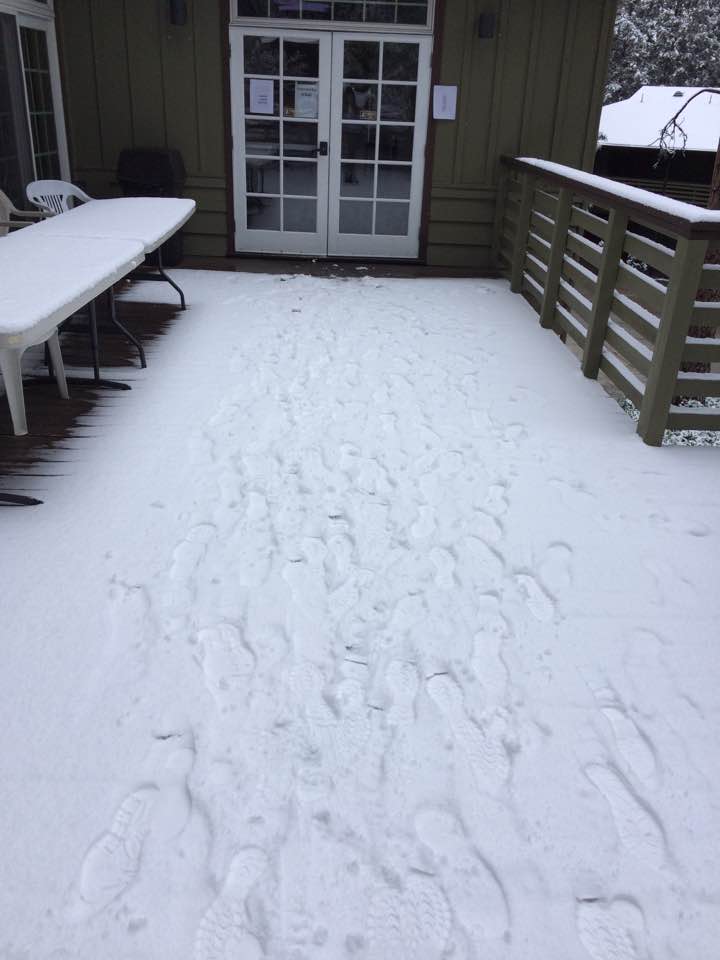
Hikes and writing time were built into our schedule, which provided additional time to share with other writers. Wine and appetizers in front of a roaring fire at a nearby restaurant made us feel like we were in a story. The weather became a main character over the weekend, as we changed from sunny spring weather on Friday to a Sunday morning blanket of snow.

All weekend long, I cherished each stolen moment to revise a few more chapters. With the help of one of the leaders, I reprinted two chapters that I reworked after the first two critique sessions. I worked with a feverish zeal that reminded me of my rough draft days. It was hard to put my computer away.

Suddenly, it was Sunday morning and time for awards. If we chose, we could have submitted our first ten pages for a contest a month before the retreat. A team of published writers and editors judged the manuscripts in a blind contest. The two categories of middle grade and young adult were judged separately, with first place and honorable mention in each. As the leaders announced the young adult winners, I hoped that someone from my critique group would win since the quality of the work shared had been excellent. What I wasn’t prepared for was when they called my name for honorable mention.

As I stood up to receive my certificate in a daze, I realized that my book, almost abandoned for the immediate gratification of shorter articles, deserved to live. The College of the Crones would be finished, but with new direction and inspiration.

After lunch, I headed down the mountain through a snowstorm, eager to get home and continue revisions on my book. Instead of rocks, I had found the gold hidden in my story. If you ever have the opportunity to attend a writing retreat for works in progress, don’t hesitate to sign up. It turned out to be a weekend I will always treasure.


On being published, and how it changed my life

i-am-a-writer

Two years ago, I got sick and tired of my pathetic longing to publish my novel. My book project was only one year into the revised drafts, and I felt like time was running out. Let’s face it –I’m not getting any younger, and if I want to be a best-selling author I need to get my first one on the New York Times bestseller list. So I sent out an army of queries to any agent that represented my genre. My submission spreadsheet grew into several pages with polite rejection notes. The agent I met at a very expensive writer’s conference never responded to my query. I was desperate for a new approach.

My critique group was supportive and gave great feedback, but they were not professionals in the writing industry. I wasn’t going to improve my writing without higher standards. Should I go back to school? Seeking to improve my craft, I enrolled in a local university’s online creative writing program. What I expected was that my writing would be pulled apart, equipped with upgrades, and become the shiny sports car I needed to catch a literary agent’s eye. What I experienced was a barrage of articles about writing that I could have Google searched myself. The students provided feedback on each other’s assignments, although most were not qualified or bold enough to give more than vague compliments. Curiously absent were concrete suggestions from the teacher. Although it was great to have structure and deadlines for creating short pieces, I didn’t really learn anything new.

However I did enjoy discussing the art of writing with other people interested in pursuing a writer’s life. There had to be other writers out there like me that wanted to be taken seriously. So I searched the internet and found the California Writers Club. It was a state club with local branches, so I checked out the Inland Empire Branch. What an exciting moment when I walked into a room with thirty other writers, most full time professional ones, and listened to a presentation about marketing books on social media. These people were living the life I dreamed about! I joined the group, and the members have become some of my dearest encouragers.

One of the club’s suggestions was to set smaller goals along the way to my big goal of publishing my novel. For my WordPress blog, I include articles about riding with my husband in the HOGs (Harley Owners Group). I found a database called Duotrope where you can find submission information for all varieties of print and online magazines and contests. A new submission spreadsheet was begun, and within two months one of my articles, “Backroads to Pioneertown” was accepted into an international travel journal called Coldnoon Travel Diaries. There was no money award, but my work was validated. Buoyed with my success, I continued to submit articles and last month “The Almost Grand Canyon Trip” was published in the literary journal The Courtship of Winds.

            My blog caught the attention of our HOG chapter and I was asked to become the editor of their newsletter The Handlebar Star. My responsibilities include collecting and editing articles written by the club officers and adding my own touches.

Success with my nonfiction writing sparked my creativity toward my novel project. Instead of giving up, I asked for help from my social media audience. One of my Twitter followers agreed to become a beta reader for me, and sent me seven pages of notes and revision suggestions. I was surprised to discover that the roots of my story were still alive, and I am weeding out unneeded sentences and watering my characters. I am learning to persevere in editing, long past the point where I’m in love with any of my sentences.

What began two years ago as a desperate search for help has shown some small victories. I’m not giving up on writing courses yet, although I will do more research on the best programs. Joining a professional writers group has given me a supportive family that helped me discover opportunities I never would have found on my own. And becoming an editor has reinforced the basics that I need to practice.

And so I start this year as a published writer. Did it change my life as I thought it would? Absolutely. Criticism and encouragement have sharpened my writing sensibility and I’m ready to do the work necessary to perfect my writing style. Today I’m even more dedicated to improving my writing and finding new ways to get my stories out to readers.

Review of “The First Monday in May”

FMM

When I first saw the trailer for this documentary, I thought it would be just another reality T.V. show, with people tearing out their hair and swearing at each other. I had no idea that it was a love story.

“The First Monday in May,” directed by Andrew Rossi is a series of interviews and behind the scenes negotiations leading up to the 2015 New York Metropolitan Museum of Art’s Gala. The viewer gets to ride along with Andrew Bolton and Anna Wintour as they navigate the numerous decisions that will result in the Costume Institute’s exhibit “China Through the Looking Glass.” Anna Wintour is the dragon lady of this story, the real life inspiration for the book and movie The Devil Wears Prada. If the movie would have focused on her harsh decision-making character, it would have been difficult to watch. Instead, her infamous public image was downplayed, keeping the focus on the Gala.

As the movie unfolded, I was drawn into the romance between Andrew Bolton and his exhibit. As he interviews the designers who contributed costumes for the show, I could feel how captivated he was by his project. He hangs on every word from designers from Dior, Yves St. Laurent, and Chanel, gasping with delight as they display their creations. We follow the courtship between Andrew and his exhibit from Paris to Beijing. Chinese officials he meets show stone faces like overprotective fathers. But his words were passionate and pleading, ensuring their support.

As designers send their creations to the museum, every outfit is handled gently by workers with paper lab coats and latex gloves. Costumes were hung in sterile white closets like precious pieces of art. One of the most beautiful pieces was a long gold sequin dress with a train longer than any wedding dress I have seen. As the clothes were mounted onto abstract, faceless mannequins, they became alive.

The preparations for the Gala dinner seemed no different than wedding planning, as Anne’s assistants labored over the seating arrangements for celebrities and fashion industry giants. As the time grows closer, unforeseen problems with the lighting set the installation schedule back. In a reality series, this would have been the place where we saw the main character with his head in his hands, walking out the door, or screaming at the workers.

But this is the Met, and it is a love story. Andrew was willing to do whatever it takes to win his bride without complaint. His staff, the brides-maids and best men, work long hours to make Andrew’s vision come into reality.

At the unveiling of the show, the viewer gets to see some of the 50,000 costumes that were included in the “China Through the Looking Glass” exhibit. It starts with the wedding guests arriving on a red carpet, humming with the opulence of celebrities in designer dresses and tuxes. Beautiful women preen themselves before the cameras and reporters on their way up the stairs to the museum. Everywhere there is chaos of people laughing, drinking, and fake-hugging each other.

But we are allowed a more intimate view with Andrew as he walks alone through the completed exhibit, romantic music in the background. As the gowns glisten in the spotlights and pose against ancient Buddha statues, we can’t help but believe that his exhibit, his work of art, loves him back.

The Day I Became a Writer

SAMSUNG DIGITAL CAMERA


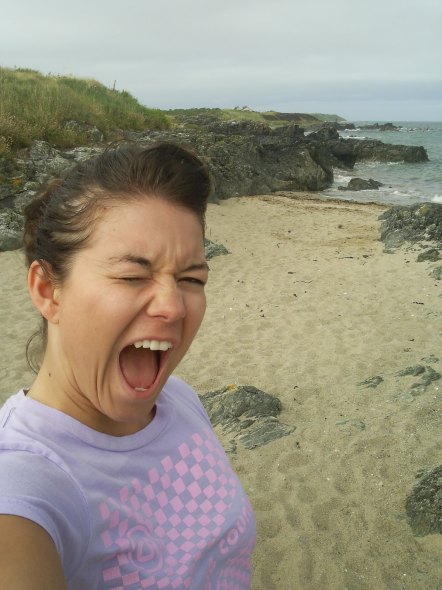
I became a writer one day in Ireland, standing on slime covered rocks squinting over at France. Actually I had written many stories during the course of my forty years, but that windy beach changed me.

My daughter, Kristin, and I were five days into an eleven day quest through Scotland and Ireland. I was collecting research on castles for a book, and I liked seeing them in person more than looking at pictures on the internet. Earlier that week, we had toured Edinburgh Castle, and were now driving through the back roads of Ireland on our way to Blarney Castle.

I had rented a car in Dublin with the encouragement of our travel agent who assured me I would quickly learn how to drive a left handed stick shift on the opposite side of the road. How lost could you really get on an island? The day I picked up the car, Kristin and I learned the answer for over two hours before accidently passing our hotel, thanks to the one way streets and tiny street signs that were tacked to the sixth floor of the brick buildings at every major intersection. After a moment’s embarrassment at the front desk when I learned they were about reading to send out the Gardai to find us, I consoled myself that driving in the country would be much easier.

With the July sun shining in our faces, we headed down the east coast toward Rosslare Harbor, where we had plans to stay at a dairy farm that was also a bed and breakfast inn.  Still feeling the sting of yesterday’s mistake, I made Kristin official navigator. She carefully studied the map, which was twice as interesting since the town names were both in Gaelic and in English. We managed well until we reached the roundabout outside of town. Turning right into the circle of cars, it was the merry-go-round on the playground all over again. I merged into the spinning swirl of cars until we jumped out onto the road I thought would lead us to the dairy farm.

The other difficulty about driving in Ireland is that once you are on a road there are no road signs to reassure you that you are indeed on the correct road. Only when you arrive, an hour later, at the next medieval town do you realize that you should have stayed on the roundabout one spoke farther to the right. Since this was before phone navigation, we stopped at the only place you could ask directions – the pub.

Forty five minutes later, after we had shared stories with the old men who seemed to live at the pub, we were headed in the right direction. When we finally passed the old oak tree, turned right at the corner where the white cows stand, and turned left at the golf course, we ended up at our destination. A two story brick and wood house with a tall chimney, surrounded by barns and other buildings popped up between the hills.

After sipping tea with our hostess, Kristin and I decided to stretch our legs by walking to the beach. We followed the low stone wall all the way to the end, as instructed, passing black and white cows and sheep with pink spray painted on their rear legs. A narrow dirt path led us through waving tall grass, between randomly tossed chunks of rock, until we came out to a deserted beach.

Waves crashed over slippery black rocks, creating fountains of spray. We climbed out on the rocks as far as we dared, braving the icy spray carried in the breeze. Looking out to sea, we could see the outlines of cruise ships and cargo ships on their way to Europe.

“Ireland!” Kristin yelled over the crashing surf. Here we were, around the world from California, standing on the beach of the land that birthed many writers. They were my ancestors, and I had come home.

At this point in my life, my identity had been shaken. I was no longer a wife. My husband’s relatives and friends had faded away in grief. My career in retail buying had been swept away, and replaced by a career in teaching. My children were growing up and independent, leaving me with empty time. Time to write.

Standing there on that slippery rock, in the land of my ancestors, I suddenly knew that I was a writer.


Dancing with Mountains

Ortega

As our HOG chapter roared down the narrow road that paralleled Lake Matthews, the sky was bright with promises of cool spring weather. After previous days of thunderstorms, this blue sky only held wispy feather clouds, incapable of interfering with our ride. My husband and I were riding almost in the middle of the pack, with eight riders ahead of us and nine behind. Before we had left the dealership, the road captain had called for two sweeps, one that rode directly behind us and one at the back of the group, in case we were separated by traffic lights. He also reminded us that if we had difficulty and had to pull off, the sweep would stay with us until help arrived.

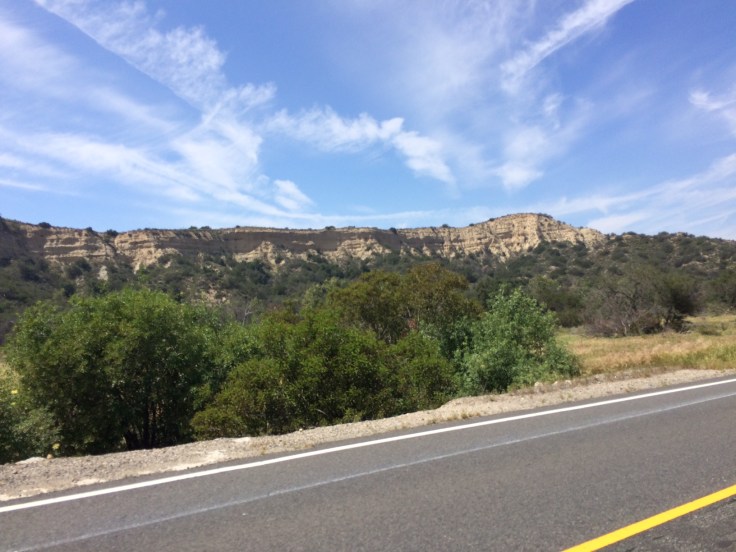
Such dire thoughts vanished from our minds as we followed the back roads down to Ortega Highway. As we turned onto the road, Lake Elsinore at our back, I looked up at the imposing ridge before us. I could see tiny cars moving in layers of road that switch backed on the desert side of the mountain. The pack spread out from its staggered formation to single, causing the group to stretch out past my line of vision.

That’s where the dance began. Through the twisted turns, our Harley obediently leaned to the left, straightened out, and then leaned to the right. The pattern had a rhythm that mesmerized me. The mountain had accepted our request for a dance, and he was leading us through the steps. On and on he led us to the beat of unheard music, over the top of the rugged mountains and into the shade of a small mountain community. We rode straight through a canopy of trees for a short time until we started down the other side of the pass.

Here the dancers dangled from the edge of a canyon, the road clinging to its side. Sometimes we were interrupted by an impatient sport bike that rushed past us, unwilling to join our dance down the mountain. Still we danced– riding the left turn, straightening out, and then riding the right turn. As the dance continued, I readjusted my position slightly, feeling like a human caught up in an endless faery reel.

Suddenly, the road shot out straight, and neighborhoods replaced rocky cliffs. We roared to a stop at the traffic light, shaking out shoulders, taking a deep breath. The group bunched back up into two across, sharing about the ride with smiles that peeked out under their helmets. I turned around and snapped a picture of the glistening white canyon behind us. Even though I felt like I had held my breath for the past forty minutes, I couldn’t help smiling with the rest. Good bye for now, and thank you for the dance.

Back Roads to Pioneertown

Pioneertown

(Photo by Kevin Austin)

When we rolled out of the Riverside dealership that morning, most of the HOGs were still yawning. Daylight Savings Time had just arrived, and we regretted that lost hour of sleep. The sky was gradually brightening with the promise of a sunny day. Two by two the Harleys lined up at the traffic light, their snarling engines ready to run. When the light turned, we poured onto the freeway, fitting ourselves into the jigsaw puzzle of traffic.

We rode in small clumps at first, eighteen bikes too many to stay together between cars. Eventually open space allowed us to line up in staggered formation as we endured the mindless repetition of on ramps and off ramps, merging traffic and slow trucks, road construction and reckless drivers. Cloud topped mountains drew closer, looking like brownies covered with whipped crème. Frozen whipped crème. Shivering, I zipped up my heavy leather jacket and pulled the collar of my layering jacket over my chin. Promised sunshine now hid away, and the threat of icy rain loomed over us.

Hand signals rippled down the line of bikes as we threaded through traffic toward our exit. At the end of the ramp we paused, free from the chaotic energy of the freeway. One by one the pack turned onto a narrow winding road that carved through the mountains toward the high desert valleys. The road hugged the sides of rippling hills like the zigzag stitch on a blanket. The long procession of bikes spread over the hills into the distance. To the north I could see layers of mountains like bookshelves, the next shelf up holding a slow moving freight train, and the top shelf the frantic vehicles on the freeway beyond our exit.

Our journey changed drastically. We fell into the rhythm of curves and dips as we traveled through land that was unconcerned about man’s ambitions. Water carved red rock hills covered with bristly bushes chased each other into the distance. A sheer rock wall watched us from the left with a lofty arrogance. These rocks existed when the Native American tribes roamed over them on horseback, and they would still stand after our passing. The twisty roads forced us to ride slowly, slowing our pulses, slowing down time. Bike following bike, the road leading us on.

Suddenly the road spit us out into a wide flat valley and straightened itself out. The Harleys gladly stretched their legs and gained speed. Gradually I grew aware that the ominous grey wall of mountains on our left was growing closer as we rode. As I looked behind and ahead of us, I could see no end to it. Yet our road seemed determined to connect with it. How would we get over it? Would the road lift us to the top of that wall or would man’s determination have tunneled through it?

Miles sped by in our race to the wall, and soon I could see the end. The wall sloped down before it merged with another ridge, and into this opening the road stretched through. The bikes climbed over it without strain, and dropped down into another flat valley. The mountain peaks on our right were dusted with snow, and I knew that on the other side, snow boarders were riding rails and practicing jumps in the fresh powder. However this side held dry cracked rocks and joshua trees reaching toward the bright blue sky. Water in this valley had to be trapped by high dams like the one we just passed.

The road passed through white fenced ranches that eventually led into small groups of houses and buildings, towns so small they seemed out of place in overpopulated southern California. A man in his electric wheelchair rumbled on the dirt shoulder. Where he was headed on a straight narrow road with no sidewalks I couldn’t guess, but I admired his perseverance. The line of bikes pulled into a gas station, and we stretched our legs and gulped some water. Although it was not hot, the air was so dry it crackled.

After a brief rest, we roared on our way toward our goal. After passing through miles and miles of caked dirt dotted with brush and more spiky joshua trees, the land surrounding us smoothed out into a huge flat area with no vegetation, a dry lake bed. I wondered what happened to the water—was it diverted for other purposes, or did it simply dry up over time? It felt like a lunar landscape had fallen into our path.

The road called us on, and we descended into another valley, this one much hotter and dryer than the last. Pink desert mountains lined the horizon on the left. A line of buildings in the distance slowly grew into our lunch stop. Wooden buildings, including a saloon front, saddle shop, and a jail, formed the skeleton of an old western movie set, now a tourist attraction and motorcycle destination. We pulled into the dirt parking lot and parked the bikes in a row, just like cowboys would have tied up their horses in front of the saloon. I carefully dismounted our Harley, stiff muscles protesting. We all took off our helmets and layers of jackets and leather chaps. Even though we had just ridden over twisting roads and through dry dusty towns, we were excited to share our journey together. It was time for food and drink, tales and jokes, friendships forged in adventure.

College of the Crones- Chp.3 Part Three

mask

The prince calmed himself as he composed his reply. Everything inside him wanted to scream in this insignificant worm’s face. He called upon his magic to quiet the storm, difficult as it was to do so in this iron-filled land. His face relaxed, and he released his grip on the arms of his chair. The silence was as weighty as the pause before a judge’s verdict.

“I…understand… your… concern,” replied the prince. He took a deep breath, letting it out completely before he continued. “I know that the men of Beautiful work hard for the glory of my land. I sincerely wish that I could give my beauty tonic freely to all who ask.” He chuckled a bit under his breath, its sound causing the dancers near him to stop in mid twirl. “But its ingredients are rare and growing more scarce by the year. And my men already travel long distances through dangerous lands to obtain what is needed. As the risk to my men increases, so must the price of the tonic.” He paused, the corners of his mouth twitching.  “If men don’t wish to pay the price, they can simply choose not to buy it.” His jewel-like eyes glittered behind his feathered mask. The eavesdropping dancers hurried away to another part of the hall.

“Of course, Your Highness,” the scarecrow said. His face turned paler than his makeup as he considered the possible future with men married to ugly crones. No man would choose that. He shuddered at the thought. “Your generosity is well known in Beautiful. I am certain you are doing everything you can. I will disturb you no longer. Good evening, my prince.” He made a hasty bow and darted back into the noisy crowd. The guards and ladies nearest to him relaxed as the tension dissipated.

The prince exhaled and drained his cup with a shaking hand.  How ungrateful these humans are! I give them perfect beauty to gaze upon for their entire lives, and they grumble about a little labor. Subjects. How they tried his patience! How they interrupted his pleasures! If he didn’t do something, they might become difficult to control. Back in Faerie, a mere gesture alone would accomplish his desires. But his power was weakened here, away from his magical homeland. If not for my potion-making talents, I might have had to actually work for a living.

Shaking his head free of unwanted thoughts, the prince beckoned to the guard nearby. The masked soldier hastened to his master’s side. The prince whispered into his ear, “Make sure that the mayor has a fatal carriage accident on his way home.” The soldier nodded his understanding and left the hall. With a contented sigh, the prince turned back to the festivities. Learning to delegate is not so difficult after all.

College of the Crones- Chp.3 Part Two

mask

“Of course, I would be pleased to have a word with the mayor,” the prince answered instead.  He had to continue the charade if he was going to achieve his goals. Still, maybe he could appoint a royal advisor to address these trivial matters in the future. This interacting with the local simpletons is a waste of my abilities.

At the wave of the mouse, a tall scarecrow approached the prince’s table. His face was covered with white paint, his lips and eyes traced in black. He was wearing a rough burlap shirt, well-worn and patched pants, and a large straw hat. Straw was falling out of his hat, sleeves, and neckline. In spite of the playful disguise, his eyes looked worried. As he bowed low before the prince, a pile of straw formed on the floor.

“You may address me,” the prince said without enthusiasm.

“Your Highness,” he began as he stood up. “You look splendid this evening. May you live forever! Your masquerade is breathtaking. My wife and I are having a marvelous time.” The scarecrow took a breath. He seemed to consider his words. “However, there is a small matter that prevents my complete enjoyment. Earlier this week, some of the other mayors visited me, and we have discovered a common concern. I urgently bring that concern to Your Highness.” The scarecrow paused, waiting for his ruler’s acknowledgement. The prince graced him with a thin smile and nodded.

“The tonic price has gone up three times already this year, and your representatives have informed us that it will go up again before Yuletide. The price is already quite high. The men are working diligently from dawn to sunset every day. They can barely afford to buy bread. How much more can they work before they collapse? Of course, the potion is worth the price, but if the men’s strength fails, who will tend the fields and sell goods? Your Highness knows the crones and wives can’t do it.” The scarecrow reddened, shocked at frankness of the words that rushed out of his mouth. He waited tensely for the prince’s answer.


College of the Crones- Chp 3 Part One

mask

Interruption

As he descended the spiral staircase into the great hall, the prince was pleased to see his servants, dressed as mice, standing quietly at their posts, ready to receive guests. Masked musicians had begun to play, filling the hall with feet-stirring melodies. Long linen draped tables ran the length of the far wall, piled high with every delicacy a royal or commoner could imagine. Roasted ducks, pheasants, and chickens were kept warm under silver covers. A large tree made of pears, apples, and plums decorated one of the tables as if in bloom. Huge bowls of potatoes, puddings, gravies, and stuffing sat hot and overflowing on some tables, while cakes, pies, and pastries were stacked sweet and high on others. Servants stood by with goblets of wine and beer, their jobs to ensure no one could walk a straight line home at the end of the night. The prince surveyed it with satisfaction. No lord in all the lands provided a feast this grand.

Guests began pouring through the main entrance, and the dance floor quickly filled up. A kaleidoscope of brilliant costumes, feathered masks, dramatic capes, and silk sashes spun in obedience to magical music. The prince sat down at his head table surrounded by his court ladies, who dressed as rabbits, complete with long fur ears. They filled his goblet, loaded his plate, and competed for his glance. He would smile at one lady, admire the face of another, and then turn back to survey the dancers. Those he addressed sighed with pleasure, under the glare of the slighted. When their attentions failed to distract the prince from studying the other party goers, they turned their attention there also, watching from their luxurious perch.

The prince entertained himself by evaluating the swirling women as they passed him. I certainly don’t want that swan woman with all the droopy feathers.  She’s excessively tall, and her neck is too short. A red and yellow clown caught his eye. Maybe that one. I love fair hair, and hers is like spun gold. There is always room for another beautiful face in my court.

“Your Highness,” squeaked one of the prince’s mice. “If it pleases you, Sire, the Mayor of Oakbottom would like to have a word with you.” The twitchy mouse awaited his reply. Now what? The prince barely muffled a yawn. Not another problem with wolves? It took so much of his energy to feign compassion for any extended length of time. He needed to enjoy this ball. Didn’t these rude villagers realize it was after official business hours? I should have this annoyance thrown into the dungeon.


Cook’s Corner

Cooks corner

First there was the gathering. One by one the Harleys roared into the parking lot, and riders popped off their helmets. They joined the circle standing nearby, which grew minute by minute until the magical KSU time. Old friends met some new friends; names were exchanged, as well as handshakes and hugs.

Suddenly, the appointed time arrived, and riders scattered to their motorcycles, adding layers of leather, earphones, and helmets. The dog pack obediently emptied into the street, patiently holding back the thunderous power that its riders sat astride. The bikes passed through the gauntlet of traffic lights and stop signs, growling with anticipation.

At the appearance of an open road, each bike roared as it took off, eager to stretch its legs in the desert. In the backyard of the city, each twist and turn brought cobbled together mobile homes or spreading mansions into view. Both poor and rich shared the dream of the pioneer—build on the land and claim it for your own. Brick and wrought iron fences did not prevent us from viewing the piles of toys inside, apartment sized travel trailers, boats, vintage cars, and off road vehicles. The next turn revealed boarded up and crumbling shacks that told the story of dreams cast aside.

The road climbed up the side of the desert mountain, and I peered cautiously over the edge. The lake below us was wreathed in mist, deep navy blue. As I looked up, I was dazzled by the snowcapped mountains in the distance. Yesterday, my boots crunched in the January snow up in those mountains, but today I rode behind my husband on our Harley in 60 degree sunshine. Again I was reminded why Californians find it difficult to be transplanted in other states. We take our climatic diversity for granted.

With the top of the mountain reached, the snarling pack of Harleys threaded themselves through the narrow pass between the peaks. The tree covered mountains stretched before us, looking like a fleece blanket thrown over unknown items. Their mystery remained unrevealed to us as we sped past them, concentrating on the curves of the road. The wind rushed in our faces as impatient sport bikes passed through our line, determined to push the boundary between the capability of their motorcycles and eminent death.

After some time had passed, the mountains spit us out into the hills near the beach. The pack turned, and we enjoyed the tame shrub dotted hills after the rugged pass. The wide, multi-lane road, bordered with elaborate landscaping, spoke of the area’s affluence. The major intersections boasted stores on all four corners, including upscale fast food restaurants. After all, after Mommy’s busy day at the office, or shopping, she doesn’t have time to cook.

A few turns later, we left the red tile roofs and bird of paradise behind and dropped down into a narrow canyon. The crowded big box houses gave way to sprawling ranches nestled under towering oak trees. Elegant horses lounged in white fenced corrals. Bicycle riders in full racing gear shared our mud streaked road. Our Harleys obediently slowed on hairpin turns as we crawled to the bottom. I realized how close we were to the beach when I saw the hull of a large boat under construction in someone’s front yard.

A long line of parked motorcycles signaled the end of our journey, Cook’s Corner. We pulled up next to custom choppers, full dresser cruisers, and lean sportsters. Live music called to us from the patio, smells of hamburgers and fries caused my stomach to rumble. After I peeled off my chaps and stashed my gloves and helmet, I followed my husband and our fellow riders across the wooden bridge. A carnival atmosphere assailed us with booths selling motorcycle clothes.

Inside, men, many bearded and wearing hats, were crowded at the bar, cheering at the flat screen displaying a football game. Spandex coated bicycle riders, an older gentleman in a wheelchair, and bikers with leather jackets announcing various motorcycle clubs all patiently waited in line to order food. A man at the bar turned back to tell my husband, “You see those guys in line? They’re part of this riding club. The dealership sponsors them.” With a laugh, my husband shows the man his patch, and they exchange a few more words.

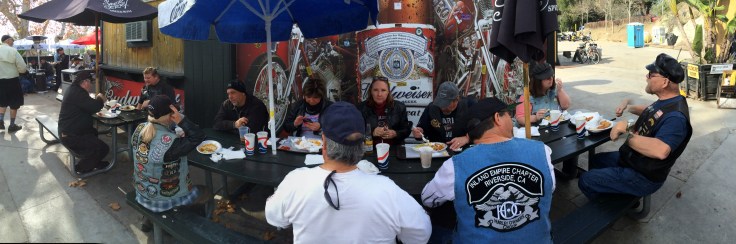
After picking up our tray of food, we joined the rest of our group seated at a long table outside. The band was cranking out classic rock on the patio a few steps above us, but we were far enough away to enjoy conversation. Looking around, I was again amazed at the variety of people gathered at this place. Not all motorcyclists, yet sharing the love of spending time outdoors on a sunny winter afternoon. For this moment, it was enough to connect us.


Blog at WordPress.com.

Up ↑