The writing retreat

At the beginning of May, I attended a writing retreat up in the mountains of Southern California. Tahquitz Pines in Idyllwild, once a youth camp, has been refashioned into a wedding/resort destination. Its cabins, bunkhouses, and lodges still whisper echoes of Christian songs and children’s laughter.

The writing retreat is put on by the Southern California chapter of the Society of Children’s Book Writers and Illustrators. A small group of authors who write middle grade and young adult fiction work in critique groups to improve their stories. Two literary agents and editors give their insights as part of the groups. In addition, attendees get one on one time with one of the industry professionals. Written critiques were purchased separately and given to the writers before the retreat. Time is set aside during the three day retreat for revision and writing time.

All of this sounds like a lot of work. But there were plenty of social activities. There were team building exercises, yoga, hikes, a pizza party by the fire pits, and a game night. Some writers went into the quaint town of Idyllwild to get stronger coffee or visit the bakery.

My favorite part was hanging out with other writers. Most of them don’t live near me, and the only time I see them in person is when we have our fall conference and this retreat. Being a writer means spending time in solitude and dealing with rejection. Sharing my stories with other writers encourages me to work harder. Spending time with other writers reminds me that we are all in this together. We can celebrate our writer friends’ victories and commiserate about the slow grinding machine of publishing.

When I come down from the mountains, my vision for my writing is clearer. Revising my stories seems less daunting. My words flow like Strawberry Creek, the rushing stream that runs through Idyllwild. I am encouraged and refreshed, ready to press on.

If you are a writer, I hope you take the opportunity to go to a writing retreat. In a world full of rejection, your writing family can be the hug you desperately need.

The quiet creative zone or what happens after you sign with an agent

For the last eight years, one of my writing goals has been to find a literary agent. Last October, in a surreal moment on my birthday, I got “the call.” Actually, in our post COVID world, it was a request for a Microsoft Teams virtual meeting.

It was really happening.

At the meeting, we talked about ourselves, our dreams, my book. Then Tia Mele made me an offer of representation. Because I still had my book out with other agents, I told her I’d get back to her after I notified them.

After I’d received prompt responses from the other agents, I made my decision. In October 2023, I became an agented author.

I went through two rounds of editing, and then Tia created a Google spreadsheet with the publishers she was sending my book to, similar to my querying spreadsheet. But my querying was done.

Now it was my agent’s turn.

After spending years researching agents, revising my query, synopsis, and pitch, it was someone else’s responsibility.

Now I was free to focus on my writing. At first, it felt weird. Like I should be doing something. In the back of my mind, I realize it’s the calm before the editing storm. But it feels good to take a breath and have more creative time.

If you’re still in the querying trenches, take heart. With a lot of hard work and a little courage, you will find the right person to champion your work.

Books are better

As I scroll through my streaming channels, looking for a TV series I haven’t watched twice already, I realize a great truth.

Books are better.

Books are better because on my Kindle, there is an endless supply of new stories. This is helpful when you finish a book at 3:00 am.

Books are better because I can skip over the boring parts. Or linger over the marvelously crafted ones.

Books are better because if I don’t like where the author is taking me, I can close the book.

Books are better because the way the characters look in my head is way more accurate than the actors chosen for the TV show.

Books are better because sometimes you can actually meet the author at a book signing.

Books are better because you get to know the characters in greater depth, including things they are too polite to say out loud.

Books are better because even if you are sitting in a hospital waiting room, you can escape to the Shire and have cake at Bilbo’s birthday party.

Books are more reliable to convey the author’s message. Even though there have been some great adaptations of books into TV shows and movies, most readers agree something is lost along the way.

And one last reason—reading great books inspires me to write my own.

That’s why if I’m not writing at my laptop, you’ll find me reading a book.

A Pandemic, Distance Learning, Natural Disasters, and Stories

storm bird


If you’re a writer and having a hard time focusing on your story, it’s not surprising. As hard as I try to impose order on my daily life, personal plot twists keep popping up to thwart my efforts. But don’t worry—this is not one of those “doom and gloom” posts that no one wants to read. Instead, this is about how stories emerge despite the chaos around us.

Stories want to live, too. Even if our minds are swirling like hurricanes (hopefully not as we’re boarding up our windows), we can’t help creating a narrative. As we go about our normal lives, which now includes teaching to a screen several hours a day, a story begins impose itself over our concerns. A character emerges, braver than us, who faces our same problems but in space. Or in a world of magic. Or sometime long ago before Google Meets.

Soon other characters rise up to aid our main character’s quest to save their world and right its wrongs. Quirky friends that illuminate the main character’s strengths and weaknesses. Maybe even a potential romance, although our hero really doesn’t have time for that right now.

Just like us in the real world, our main character, who now calls herself Raylene, tries lots of different strategies to solve her problems, only to be stopped at every turn. Fortunately, she doesn’t have to deal with lagging internet connections. It’s the antagonist who has shown up, just to make things more difficult. The villain is product of our nightmares, armed with complete knowledge of her fears. We’re not sure how to help our hero because her paralyzing fears belong to us.

We could remain stuck like that forever, but Raylene has her own Samwise Gamgee, reminding her of who she is and why she is risking everything. They go on together, and suddenly a thought pops up that we should call that friend we haven’t hung out with for months because of the pandemic.

When our hero and her sidekick fail, unforeseen help comes their way, and suddenly the battle is back on. At the same time, we, the writers, are in the middle of our own battles, standing in line at the medical center, waiting to get your temperature taken, or grabbing the last bottle of Lysol off the shelf at the grocery store before an old lady with a cane beats you to it.

Finally, the fighting ends, the day settles into night and your mind calms. Raylene limps back down her mountain with her hair all askew and rejoins her friends. We reach the end of our day and realize that despite overwhelming odds, we made some progress. When we lay down on our pillows, we hope the melatonin we took will really help us sleep. Because we need our rest before the battles tomorrow.

When the story comes back.


After the Fight is Over

Inspiration, Motivation, Life, Inspirational, Outdoors


It’s done. I wrote 50,000 words for #NaNoWriMo2019. Funny thing though. I still want to get up at 5:00 a.m. and write. Instead of creating a new book, I’m working on the HOG newsletter and typing this blog. After that, I need to work on revising my other book. At various points during November, I thought I’d run out of words, but my fears were unfounded. Of course, I need to begin revisions on the rough draft I wrote during NaNoWriMo, but that book needs to ferment for at least a month.

Rain beats on my roof, wearing away the rough edges of this difficult year. Too many funerals, not enough weddings. Negativity and violence every time I pick up my phone. Christmas is knocking at my door, and I long to feel its glow.

In an hour, I’ll bundle up, grab my umbrella, and go out into the world. Two and half more weeks of school before vacation. In the midst of the holiday rush, I smile.

I wrote a book in November. Rain can’t wash that away.

Almost there

Mountain Climber, Sky, Landscape, Climber, Mountain

I had been doing so well. Cranking out 1,500 words a day for #NaNoWriMo2019 like I knew what I was doing, when suddenly I ran out of story.

Just like a car, a writer can run out of fuel, in this case words. At the beginning of November, I’d started with an outline and 17,000 words for a new project. No problem. The outline ran out after the second week. A slight problem. I started talking up new scenes for the book at dinner and writing them in the morning. Worked great right up to the last two days.

My book was finished, and I still had 2,400 words to go. Now I had to take back out my amended outline and find places to fit more scenes. A big problem if you have a deadline. But I sit at my computer and type, dragging my dead brain up the mountain, wishing I had a Samwise.

But it’s too late to turn back now. I’m already walking on the burnt ground of Mordor. If you’re with me, if your word count hasn’t turned to balloons and confetti yet, don’t despair.

There’s still two days left.

Twas the Night Before NaNoWriMo

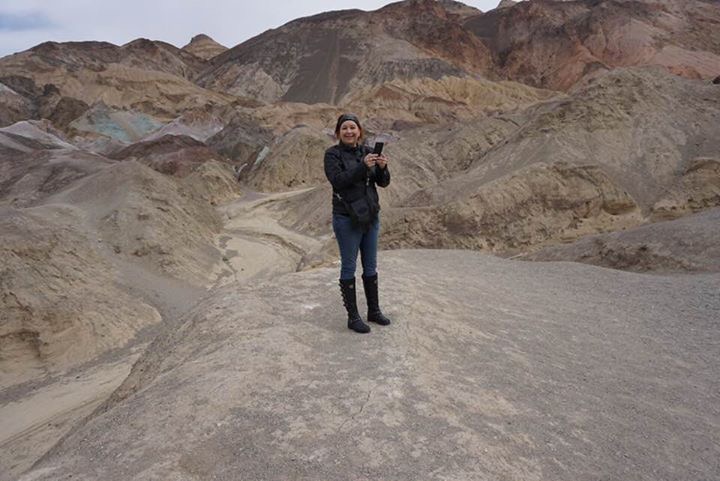
Death ValleyJodi


I have to admit I’m a little nervous about participating in NaNoWriMo this year. If that sounds like gibberish to you, it’s the National Novel Writing Month. It’s a website and a bunch of people who want to break through barriers to write as much as they can in one month. Specifically, 50,000 words.

You may think that’s crazy, and you’re not wrong. But there’s great energy in joining with writers in your community and far, far, away to create new stories. My last book, Beach Witches, was birthed through NaNoWriMo. Granted, I generated 50,000 words, but it also took me two years of revisions to wrap up the book. Now it’s out on submissions, waiting for its place in the publishing world.

So tomorrow I start writing. It’s a new project titled The Overnighter, a YA fantasy novel about a girl who goes on a Harley Owners Group overnighter riding behind her mother. Here I go. About 2100 words a day if I want to take off Sundays and Thanksgiving.

Wish me luck.

I’ll let you know how it goes.

How three writing workshops and NaNoWriMo saved me from a two month writing drought

Me beach

Sitting down with my hot eggnog, Christmas music playing in the background, I noticed on my webpage that this is the first blog I’ve written since the beginning of September. How did that happen?

After writing every day and producing a nine episode novella during the summer, I started the school year knowing that teaching would drain my creative time, but remained undaunted as I signed up for three writing workshops at the end of September. When I opened my front door every day after school, my brain was mush and I had nothing to write. My husband and I were even too busy to catch many HOG chapter Harley rides, so I did not even have any Harley ride tales to share. I was certain that hearing about successful writing would motivate me to press on.

The Inland Empire California Writers Club held their Fall Retreat in Idyllwild, a tiny mountain community, the perfect place to get away and write. One of the workshops focused on marketing. I didn’t realize that I needed to work on a press kit before my book was published. After the retreat, I had time to write in my cabin in front of the fireplace. It was fun to entertain fresh ideas and characters after spending years on College of the Crones. After writing, polishing, and submitting that three-year project, I needed to turn my attention elsewhere. Waiting for the next query rejection is a dismal way to spend your time.

Next came a one-day workshop up in Hesperia called “The 90 Day Novel” with Alan Watt, from the L.A. Writers Lab. Alan became my characters’ psychologist, as he helped each of us to draw out the backstories and motivations that would make my story ring true. Although it was an intense day with a small group of writers, I came home with a greater sense of who my characters were and how they would react in different situations.

The last writing conference, held the first Saturday in October, was The Society of Children’s Book Writers and Illustrators Meet the Editors Day at Cal State Fullerton. Editors and agents talked about the publishing industry. I had the opportunity to have lunch with one of our speakers, a writer from Redlands. We talked about the importance of revisions, critique groups, and a finding an editor.

After all that input, you might think that I would rush back to my laptop and start writing. I certainly thought that on the way home. Unfortunately, school and Harley riding and my social life conspired to eat up October until I found myself with no word count, or blog at Halloween. Scary, right?

So what does a girl do? Join NaNoWriMo of course! That stands for the National Novel Writing Month. On their website, you pledge to write 50,000 words during the month of November. I took my story ideas from Idyllwild, my characters and scene outline from the Alan Watt workshop, and my dreams about publishing from the Meet the Editors Day and plunged into the deep end of my new novel. The first chapters flowed, and when I posted my daily word counts, my numbers matched the trajectory on the graph I needed to get to my goal.

Then came the three day Harley ride with my husband and our HOG chapter up to San Simeon over Veterans Day weekend. No room for my laptop on the bike. And don’t forget Thanksgiving, which stole away a few more days of writing.  I found myself in the last week of November with 15,000 more words to write.

Hard words, too. After my initial flurry through my outline, I reached the end of my story, but still too brief to be classified a real novel. I rewrote my outline, based on what I had actually written, and looked for places that needed more structural support.  Should Star go on two dates with Frank before breaking up with him instead of one? Would her friends call a meeting to confront her about hanging out with their evil magician friend?

Bit by bit I gained on my word count, 1800 to 3000 words a day. The last day of November, I still had 1500 words left. Bleary-eyed, I shooed away my husband and my Pomeranian, and pounded away on the keys.

At 9:38 p.m., I made it! A brand new rough draft of a novel, done in thirty days. Redemption for my wasted autumn.

Of course, the book, titled The Spellwriters Book Club, is not finished. Months of revisions, critique groups, and editing stretch before me.

But my writing drought is over, thanks to three writing workshops and NaNoWriMo.

Finding Gold in My Story

snow


A weekend in the mountains sounds restful, but for the twenty five writers that attended the Southern California Society of Children’s Book Writers and Illustrators Spring Retreat in Idyllwild, it turned out to be three days of hard work. The focus was on middle grade and young adult works in progress, which placed me in the company of my genre peers, rather than in the mixed company of most critique groups I had attended.

For me it was the last effort I was willing to extend toward a project I had been writing for three years. A book that I had thought I had finished, but had been quietly rejected by agents for the past two years. The College of the Crones had sat unloved in my document files, while my creative nonfiction articles were getting snapped up by travel journals. The first time I’d thought the book was finished, I spent worthwhile money on professional editing. I had even pitched my book to an agent at a writing conference, and took her advice to heart, getting rid of one of my main characters. But I was tired of working without result. The title of the retreat was “Finding Gold,” but I wasn’t sure that my book had anything valuable left.

The dream team of masterminds behind the weekend included Heather Buchta, who organized a group of writers who mostly had never met each other into focused critique groups. A few weeks before I headed up the mountain, Heather emailed our group with a request to share our photo and synopsis of the work we were planning to share. This proved to be brilliant, as we knew who to look for when we arrived. Also we didn’t have to spend a lot of time getting our group up to speed on our stories.

Although I had attended previous writing conferences, this one proved to be the most productive. We had four sessions of critiques with our small group of six and our leader. In addition, an agent, editor, or published author would also sit in with us. Each writer had fifteen minutes during each session to use as they wished, timed by our leader. Some writers read different chapters each session, while others took the feedback and revised the same passage, printing out copies for the group on the printers that some of the leaders brought with them.

Between critique sessions, Kate Sullivan, senior editor at Delacorte Press, and Erin Young, agent at Dystel, Goderich and Bourret, gave brief, useful presentations on theme, query letters, and pitches. Estelle Laure and Steve Bramucci, published authors, told their tales about being in the trenches as writers. These session drew laughs as well as tears, and plenty of “ah-ha!” moments.

But I will always treasure Kate and Estelle contributing to my critique group. They set a high bar for courtesy and professionalism. And I will never forget the passion and meticulous attention they showed toward my manuscript. Priceless.

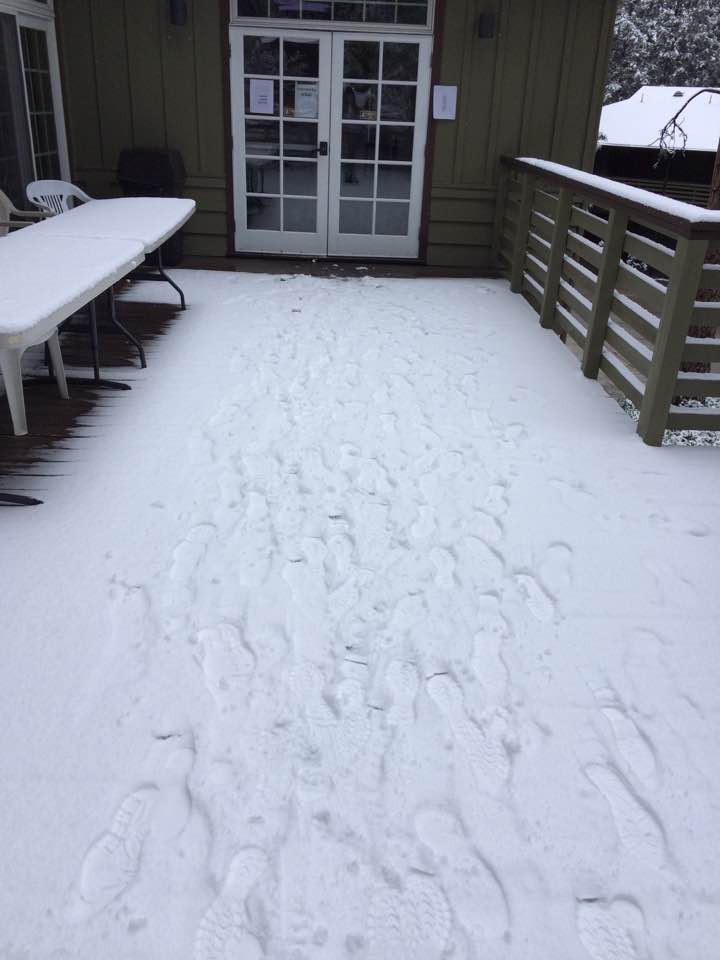
Hikes and writing time were built into our schedule, which provided additional time to share with other writers. Wine and appetizers in front of a roaring fire at a nearby restaurant made us feel like we were in a story. The weather became a main character over the weekend, as we changed from sunny spring weather on Friday to a Sunday morning blanket of snow.

All weekend long, I cherished each stolen moment to revise a few more chapters. With the help of one of the leaders, I reprinted two chapters that I reworked after the first two critique sessions. I worked with a feverish zeal that reminded me of my rough draft days. It was hard to put my computer away.

Suddenly, it was Sunday morning and time for awards. If we chose, we could have submitted our first ten pages for a contest a month before the retreat. A team of published writers and editors judged the manuscripts in a blind contest. The two categories of middle grade and young adult were judged separately, with first place and honorable mention in each. As the leaders announced the young adult winners, I hoped that someone from my critique group would win since the quality of the work shared had been excellent. What I wasn’t prepared for was when they called my name for honorable mention.

As I stood up to receive my certificate in a daze, I realized that my book, almost abandoned for the immediate gratification of shorter articles, deserved to live. The College of the Crones would be finished, but with new direction and inspiration.

After lunch, I headed down the mountain through a snowstorm, eager to get home and continue revisions on my book. Instead of rocks, I had found the gold hidden in my story. If you ever have the opportunity to attend a writing retreat for works in progress, don’t hesitate to sign up. It turned out to be a weekend I will always treasure.


The Dragon Rider- Part Two

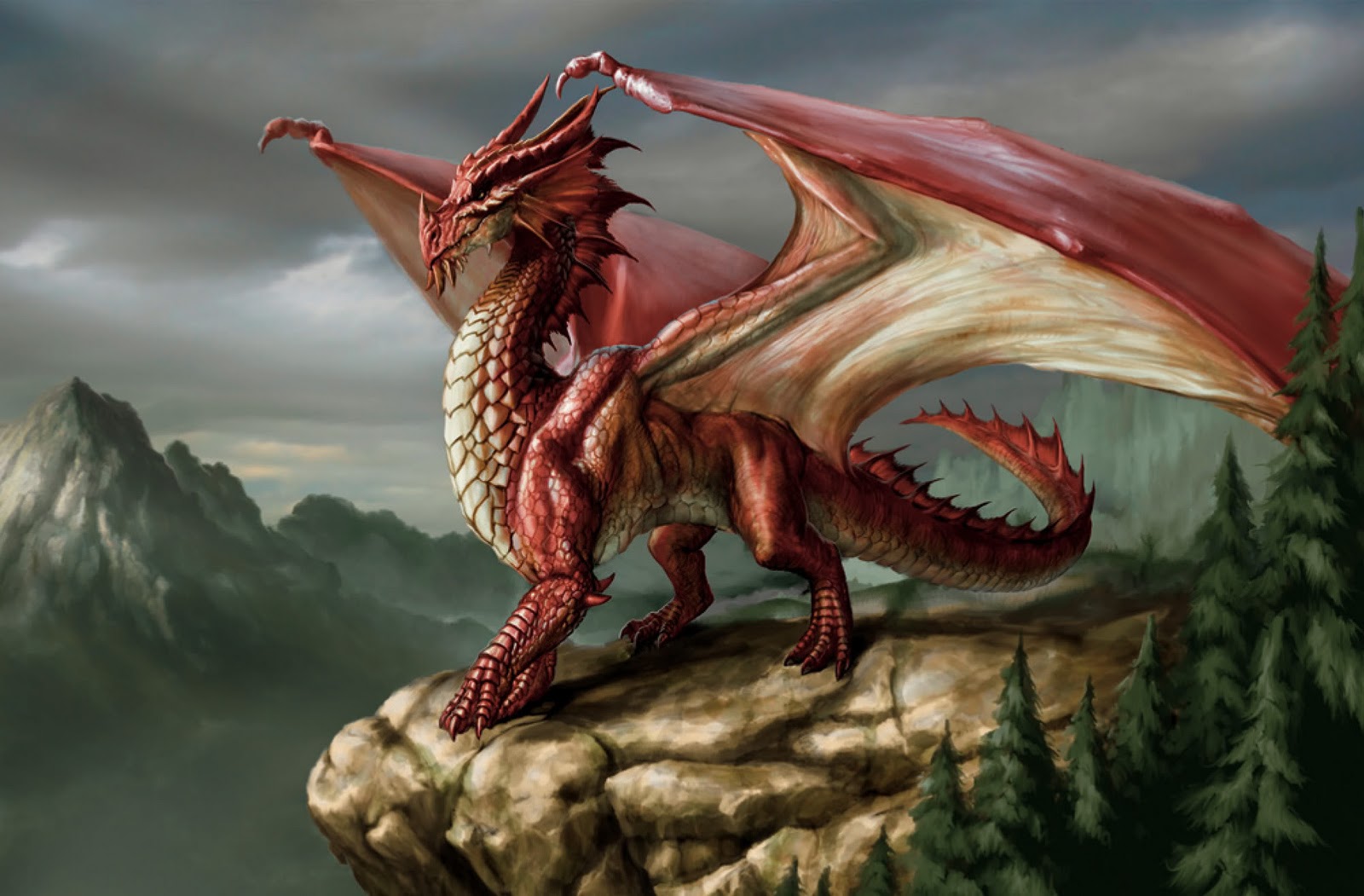
dragon 2


“You’re selling your dragon?” Worley interrupted, as he caught up to Emeri and Anzel who were deep in serious conversation. His dusty grey hair hung over his widened eyes, his usual happy face darkened.

“That’s no way to address a royal, even though she may be the youngest,” his brother snapped as he cuffed the back of Worley’s head. He wanted to do more, but his other hand was full of saddle and tack.

“Sorry, Lady Emeri,” the younger brother said as he rubbed his head with one hand. The other hand held a dark brown leather saddle with a strap wound around it.

“You’re excused,” Emeri said, crinkling her tiny nose. “I never liked all that formal stuff anyway. When we’re riding, I’m just Emeri, dragon rider. I don’t have to think about all the duties that I’ll be immersed in when I return.” She sighed and looked toward the dragon stables they were headed toward. “The First Mistress wants me to sell Petal after the Silverpoint ride.”

“But we’re going to come up with a plan so she won’t have to do that,” Anzel added.

“But you’re a princess, Emeri,” Worley protested. “You can do whatever you want to!”

“Actually, it means I have practically no control over my life,” Emeri said. “First Mistress is determined to marry me off like my sisters. It seems that there’s no shortage of trade agreements that need to be cemented with a “joyful union.” I would have thought that Evelon’s marriage to the Baron of Duns and Ellenia’s with the Prince of Overland would have been enough. The suffering needs to be complete with taking away my freedom as well.” She shifted the weight of her saddle to the other shoulder, as if the weight of her words was adding to her burden.

“That too heavy for you. Let me take it,” Anzel pleaded with her. “Why do you always insist on carrying your own saddle?”

“It makes me feel like a real dragon rider,” Emeri replied. “Just let me do it. No one will see.”

“Why can’t you be a dragon rider anymore?” Worley wondered.

Emeri sighed, and the crunch of their steps filled the silence. The path led them through a speckled glade of white trees that separated the castle from the animal enclosures. It was a perfect sunny day for the capricious days of planting season. Finally she said, “First Mistress says that I must be married. It is her royal opinion that a prince would not want to marry a dragon rider. I need to settle down and take on more responsibilities.”

Anzel grinned. “Like producing royal heirs?” He was the oldest of the trio, nearly sixteen, and thought he was very worldly.

Flipping back her hair, Emeri retorted, “That’s not the only responsibility I’ll have. I will entertain leaders from all over Tessar. I’ll have to study what foods they prefer and how to greet them properly.”

“Doesn’t sound as fun as dragon riding,” Worley concluded.

The three friends arrived at the tall stone building that had a large chimney coming out of the center of the tiled roof. Smoke was curling out of it, but it wasn’t from a fire in the hearth.

A rumble of excitement greeted them as they walked in. “Petal,” Emeri cried, “I’ve missed you. Are you ready for a short trip around the queendom?” Her shimmering pale grey dragon shook its head, sending puffs of smoke up toward the high ceiling. The dragon stalls were huge, as was needed for keeping dragons, and built of special wood that was naturally fire resistant. Petal’s head hung over the six foot gate, and eagerly sniffed her mistress. At the familiar sound, three dragon grooms emerged from the tack room to saddle up their mounts.

Anzel and Worley greeted their dragons with apples they had brought from the main house. The older brother’s dragon, Blade, was dark green, with curly feathers that made a ring around the base of its long neck. Mist was Worley’s dragon, a smaller dark grey dragon with a shorter neck and a tail that had a hard bone shaped like a hammer at its end. The smaller dragons gobbled up the treats, turning their juices into steam as they crunched.

The grooms led the dragons outside and carried over the ladders to help the riders climb up onto the large creatures. Emeri scooted up her ladder with practiced ease and strapped in around her waist and legs. Petal watched her with a large purple reptilian eye, smoking curling out of her nostrils, waiting for her command.

When they were all ready, Emeri shouted in an unprincess-like voice, “Let’s ride!” and a loud whoosh of wings signaled their departure.

As they rose through the clouds, she felt a weight lift from her shoulders. Rushing wind whispered promises of freedom, and crisp fresh air filled her lungs with renewed energy. Dragon riding was her escape from a world she had no control over. To her right flew Anzel and Blade, who was wearing a huge grin. A glance to the left showed Worley holding his reins in one hand, his other on Mist’s neck.

The clouds below them thinned, and she could see the multicolored patchwork of fields surrounding Thorington Castle. For generations the Thorington line had controlled vast holdings of fertile farmland, which ensured their place as the bread basket of Tessar. Far to the south rose the wrinkled mountains of the Bearded Ones, the source of strange tales. To the west the deep blue ocean caressed the beaches of Ingest, while behind her stood the icy tips of the Crystal Mountains. All lovely lands of deep forests and tinkling streams. Only the eastern deserts were barren. From up here, all existed in harmony with no political turmoil or peasant squabbles.

The pulsing rhythm of Petal’s muscled wings reminded her of a pendulum clock, one that was counting her moments until she would have to give up dragon riding. What could she do? She knew that she could enlist the help of her dragon riding club, but to do what? Could she hide Petal somewhere with another rider’s help, and sneak away to ride as much as she could?

She knew in her heart it wouldn’t be fair to her spirited dragon to keep her secreted away. And she wasn’t sure how much sneaking away she’d be able to do once she was a royal wife. But she knew one thing — there was no way she was going to sell her dragon. If she couldn’t find a way to keep her, there was only one thing left to do.

Emeri would ride her back to the land of her dragon’s hatching in the Crystal Mountains and set her free.


Blog at WordPress.com.

Up ↑