NaNoWriMo Check In-the pregnant pause

Girl, Sadness, Loneliness, Sad, Depression, Alone


The first three days of NaNoWriMo have been hard on my diet. My scale reflects my lack of exercise while sitting at my computer. My jeans are tight, I feel grumpy. Reminds me of when I was pregnant. Uncomfortable, moody, my priorities shifting… Yet here I sit waiting as a new book is in the process of creation. Day by day, page by page. When I was pregnant, I had to keep in mind the goal—a blessing, a child, a family. I had to be patient even through painful long days. Now with this writing, I need to remember the goal—a new book, a chance to share my story with an audience.

When it emerges complete with future revisions, it will be worth it. I will hold it in my hands with pride for it was born through sacrifice.

Write on, my friends, for your creation desires to be born.

The Art of Waiting

Calves, Legs, Human, Standing On, Stand In Line, Wait


That inheritance finally goes through, and you have enough money to take the family to Disneyland. You and hubby take the day off, buy the tickets online, load up the kids in the SUV and head down to Anaheim. The long line for parking makes you growl because you’re all amped up to see Galaxy’s Edge.

When you and the family finally walk in, you hope you remember which Disney character is the level where you parked, since you went around in circles so many times you forgot to count. There’s a buzz of excitement as the crowd presses down Main Street. Then you hit the wall. Lines. Lines for everything. Rides, food, restrooms. Despite all your planning, you must wait.

Another day, you have to go to the DMV to renew your license because you lost the letter. The line wraps around the front door at 7:00 a.m. You were hoping to get this done before work, but that looks less likely by the minute.

At the grocery store, there are long lines at the checkout stands because only two of them are open. You look at your phone. You’re going to be late to pick up your son from practice. Again.

After a relaxing day at the beach, you pack up the family and head back on the 91 freeway. Three hours later, you finally get home from a one-hour drive after waiting in crawling traffic.

Instead of going to a sit-down restaurant where you have to wait to get your food, you opt for a fast food drive through. The line trails half a block down the street.

Why is this so maddening? Why do we hate to wait? In the old days (post dinosaurs, pre internet), people used to sit around and talk to each other. They used to visit neighbors, bake homemade cakes, and sit on their front porches. There was no rush.

Now we don’t have time for anything like that. Our time is eaten up with commuting to work, kids sports, necessary errands, watching T.V. In an age where any convenience is an app on our phones, we have less time to breathe.

That’s how we’ve forgotten how to wait. We can’t wait for football season, cooler weather, Christmas presents, graduation.

Waiting is an art. Those who master it live stress-free lives as they enjoy the pause. They meet new friends as they wait at the grocery store. They talk with their kids as they wait in traffic. They smile and give grace to those around them.

Next time you have to wait, look around. Spot one of the waiting masters and ask them to make you their apprentice. Don’t wait. It could change your life.

Today She Needs to Write

Homework, Girl, Education, Studying, Student, School


A short story about a short story.

When I announced to my third grade class that one of my Harley stories was going to be included in an anthology coming out next month, a serious-looking girl in the second row shot up her hand.

“Did you have a question?” I asked.

“How long did it take you to write the story?”

Hmm. I knew this student loved to write in her journal, and her quick write responses often filled the entire page. Adults who share my writing addiction know that years can pass before a story or book is exposed to the light of publication. Would my answer cause her to close her journal and pursue another dream?

How long did it take?

Last fall I went on the Harley overnighter that became the subject of my story. When I returned, it was back to my normal life as a teacher. (Often I have compared my life to Indiana Jones, especially the part where he has to go back to his job as a college history professor after outrunning the Nazis.) A few months passed before I found time to sit down and think about that adventure.

Actually writing it didn’t take more than an hour. I read through it, adding and deleting for another half hour. After I thought it was finished, I sent it out with my other submissions, the dark hole where you rarely find out your story’s fate. Meanwhile, some of my other short stories were accepted into online magazines. Nothing for that story. I took UCLA extension classes and worked on my YA novel.

Early in the summer, I heard that my California Writers Club branch was going to publish their first anthology. I took back out that Harley story, edited it again, and submitted.

That story was accepted into the book. The editor wanted some minor revisions. Five months later, the book is almost ready to come out.

So how did I answer? My smile reflected in her eager eyes, I replied, “Only about an hour.”

She’ll find out about the rest someday, but today she needs to write.


Why Rejection Makes You a Better Writer

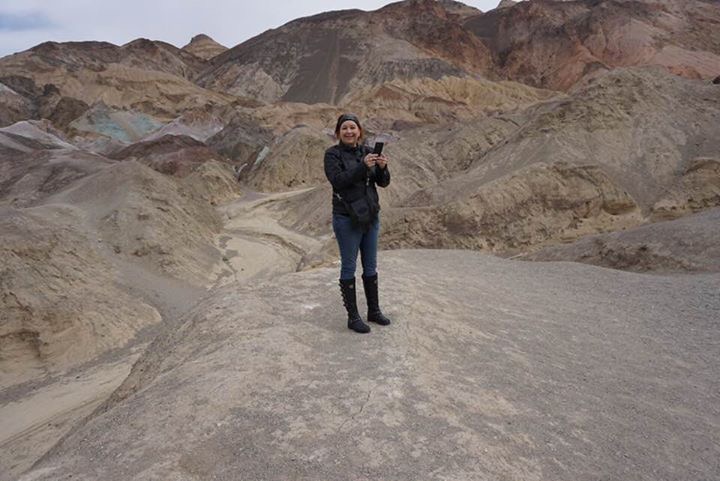
Death ValleyJodi

After a few weeks querying agents for my YA book, I needed to take a break and consider my progress. One agent, who I met and worked with in a critique group, sent me a personal rejection the same day I emailed her. Another agent, who loved the book at a retreat, sent me back her regrets. In prior years, with prior books, I would get no rejection letter at all. Only silence. Compared to no response, my recent rejections have led me to be more optimistic.

So I decided to make a list of how agent (and magazine editor) rejections have improved my writing:

  1. Book rejections make you realize that you need feedback on your writing before you send it out to agents.

 When I began my writer’s journey, I finished my rough draft and thought I had a masterpiece. I read a little of it to my friends, but I was sure that it was finished. Now I enlist the aid of critique groups, professional editors (not as expensive as you would think), writing retreats, and college extension classes before I send anything out.

  1. Agents have their own agendas.

They actually have to sell your book to publishers, who are even more jaded than they are. Agents have categories of books that they represent. If they already have enough magic books, they won’t be interested in your fantasy project. The lesson here is keep querying. You just haven’t met your agent yet.

  1. Being rejected by agents can lead to personal growth in your writing.

After getting several rejections on a book, I looked at all the comments that accompanied the passes. Agents are busy people, and if they take the time to tell me what they didn’t like about my work, I need to pay attention. This has led me to take writing classes at UCLA Extension, which I highly recommend. I also began submitting short stories to magazines so I could beef up my publishing credits.

  1. I appreciate all the hard work that goes into the books I read.

I read all the acknowledgments at the back of the novels I read, and count the number of people the author thanks. Have I exposed my WIP to that many people? Also, I was encouraged by an writer that had the courage to admit she had 17 novels rejected before she was published. Therefore, I need to stop my whining.

  1. Rejection makes me recommit to writing.

As the years pass, it would be easy to turn off the laptop and do something else with tangible results, like knitting. Writing is easy, revision is hard, traditional publishing seems nearly impossible. However, I’ve overcome many impossibilities in my life, and I’m not ready to die to my dreams yet. Rejection shows me that I haven’t reached that mountain peak— I’m still in the foothills. I need to keep walking.

  1. Rejection initiates me into the writing community.

All writers experience rejection at some time, and they can be a great source of encouragement to other writers. Joining Twitter and following other writers allows me to share in their joy and pain along the publishing path. Thanks, guys.


As you can see, rejection is not as negative as the gut punch you feel at first when you open that agent’s email reply. You get mad, cry a little, eat chocolate, drink a large glass of wine, and get back to work. And hopefully, after a lot more work, someday we’ll be sitting by the pool reading each other’s novels instead of this blog.

Winter captivity

Rain-Background

An icy blast steals my breath as I zip up my hoodie. Tight jeans, unbearable in summer, hug warmth into my legs. Lollie, my Pomeranian, trots at the end of his leash, ears pricked and tail curled over his back. Rain threatens, and I need to take him for a walk before it’s too late.

Bare black branches reach out to the grey skies above us. Lollie and I tread silently on sodden leaves scattered on the street. I walk as fast as I can in my boots, hoping my pace will keep me from shivering. The day is bleak. Where are my California blue skies? Even though 45-degree temperatures would be mild this time of year in Iowa, my wardrobe is not prepared for this unusual weather.

What will I do the rest of the day? On a typical Sunday, my husband, Frank, and I would be out exploring the back roads on our Harley or camping at the beach. My quick trip around the block today will be the only outside time I can steal. Other tasks await. I could work on revisions to my book or do laundry. But I feel the weight of the black clouds pressing down, draining my energy.

I pull off a glove with my teeth to tap the weather app on my phone. The week’s forecast features a raining cloud next to each day. Great. Not only am I stuck inside this weekend, but the students I teach will be stuck inside my tiny portable classroom all week, too. Children who need playtime to be productive. Quickly I slip my phone back into my pocket and put on my glove. Lollie yanks me to a stop as he sniffs a worm floating in a puddle. A cold raindrop spatters on my cheek.

“Come on, Lolls, let’s go home.” I pull him along with me, almost running the last block back. Wet polka dots appear on the street, as I dash up our driveway and into our warm home.

As my tea steeps, I stare out the slider at circular ripples forming on my swimming pool. I’m held captive inside my own house by a relentless curtain of rain. I take a sip of Earl Grey and close my laptop. Time to read a book.

Am I whining about much-needed rain? Not at all! Californians have restless souls that can only be soothed by excursions into its endless variety of dramatic scenery. The mountains restore our sense of awe. Watching the surf calms our anxieties. The desert expanse reminds us that we are part of a larger design. Our California dreams can’t be contained in houses, condos, or apartments. We need to feel the road under our wheels and soar to the top of the highest peak. Our sense of journey propels us through the chaos of modern life.

And rain, although essential, slows us down, tethers us to man-made things until the sun comes out, and we are free to wander again.

So I read a science fiction book, wrapped in a blanket next to Lollie, waiting for the pounding on my roof to cease. Waiting for release from my winter captivity.


How to Buy Your First Harley

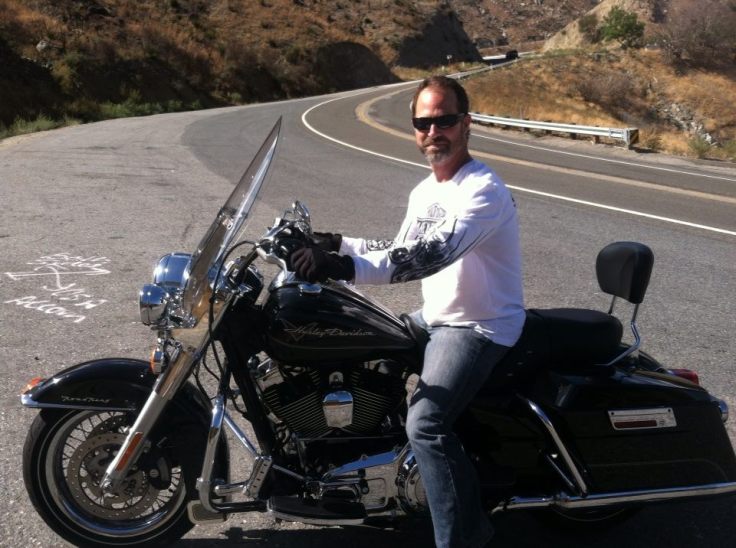
This is another exercise from my Short Story class at UCLA. The assignment was to write a “how to” story in the second person POV. This is a work of fiction, and is not intended to be read as marital advice, and the persons depicted at the dealership are not real, except for that one guy:
10352321_800024553353302_3306168421858817425_n


When you married a motorcyclist, you knew this day would come. He didn’t own a bike when you were dating since most his possessions were sold after his divorce. He didn’t even mention motorcycles during the first two years. Now you realize that all those trips to Chaparral Motorsports were not casual, especially when you remember that men don’t window-shop. Instead he lets you draw the conclusion, after he shows you hundreds of pictures on his phone, that he wants a Harley. It’s Christmas Eve, and he says, “Why don’t we go down to the Harley dealership and look around?”

You get there, and your husband has to find a spot to park between all the motorcycles. The huge brick building is swarming with bikes, inside and out, like a Harley anthill. All the workers wear bright orange long sleeve shirts, their arms and necks covered in tattoos. They’re scary but friendly, offering you coffee, and asking you what you’re looking for.

You say, “We’re just looking,” but somehow when you notice the gleam in your husband’s eye you know you’re not. He looks like a four-year old standing in the middle of Toys R Us. You feel a wave of panic, but it quickly passes. Your husband and you always talk first about major purchases. Up to this point.

Of course, there are no prices listed on the motorcycles so you have to find the guy with the long beard who nods to you with a predatory smile. At first, he’s excited that you’re looking at the newest models. Then when your husband gives him a price range, he sighs and quickly leads to their selection of used ones. Rows and row of shiny chrome, bright colors, and black leather. Some of these look even better than the new ones, with extra chrome and custom seats.

Your husband wants to sit on each one, to see how he feels on it. You play along with him, sitting behind him on the bike. Everyone at the dealership seems so excited about the bikes that you start to catch a little of it. Women walk by dressed in leather jackets and chaps, and you think you’d look pretty sexy in one of those outfits. Those women appear secure and confident, the way you’d like to feel. Curiously, your husband doesn’t even look at them. His eyes are only on the bikes. You feel like you made a good decision marrying him.

Then comes the test drive. There’s no way to avoid it because just revving the engine and sitting on the bike doesn’t tell you much about the way it moves. Your husband settles on two different bikes he likes best. One has a windshield and comfortable passenger seat with a backrest. One has ape-hanger handlebars and loud pipes and a seat that looks comfy enough for a trip to the grocery store. You tell your husband that, but he ignores you. You get mad for a moment, but then you remember that he didn’t look at the biker women.

This is the first time you ride on a motorcycle, so you don’t have the right shoes. You climb up on the back of the tall Road King, carefully placing your sandaled feet on the passenger floorboards. The backrest seems a mile behind you, so you cling to your husband with all your strength. You wish you had a jacket and gloves. The beard guy is riding a small loud Sportster, and his smile tells you he enjoys the opportunity to ride during work hours. Or maybe he’s already thinking about how he’s going to spend his commission on new grips and floorboards.

No one tells a passenger what to do, so when your husband goes through his gears to get the bike up to speed, you clunk your borrowed helmet, which doesn’t really fit you and smells like greasy sweat, into the back of your husband’s helmet. After several times, you realize you can brace your feet on the floorboards to prevent this.

As you and your husband follow the dealer guy down the road, you realize that there is nothing between you and the surrounding cars. Your unprotected leg is right next to their passenger door. You can look into cars and see drivers texting and talking on their phones, eating and drinking, and basically not paying attention to you at all. You’re holding your breath, and every muscle in your body stiffens. But no one rams your bike, and after a few blocks, you begin to relax.

The wind wiggles in through the bottom of your helmet, and you finally stop holding your breath. Orange blossoms, coffee shops, and restaurants create a bouquet of fragrance, interrupted occasionally by car exhaust and moldy leaves. As your husband leads you down a tree-lined street, you have an undiminished 360-degree view of everything around you. You remember the dealer guy called cars “cages” and now you understand why.

After you take the first bike back, you take out the second one. Climbing off the bike is awkward, and you almost fall on your bottom in front of all the bikers coming into the dealership. The next bike is customed out with ghost flames on the tank and skull embellished grips and floorboards. The guy who owned it didn’t like his wife, as the passenger only has skinny pegs for her feet. You feel a little jealous when your husband approaches it with the look he usually reserves for you. On the test ride, your husband finds that the ape-hanger handle bars hurt his neck like you suspected they would. It’s always best to let your husband find these things out for himself, preferably before you buy the bike.

You arrive back at the dealership too soon. You and your husband have to give back your helmets. There is an awkward silence as the dealer guy waits for you to cave in. Your husband looks at you, and you’re surprised when you say, “Let’s get the first one!”

The dealer guy nods like he’s known this all along, and you go to his office to sign the paperwork. That’s how you end up buying your first Harley.

Another perspective on “Blue Horses”

I’m taking a short story course at UCLA Extension with author/instructor Michael Buckley. One of our assignments was to write in the style of Franklin’s “Blue Horses.” I decided to write from Evelyn’s point of view and add some plot twists:

coffee

His coffee cup was still dripping water on its hook when Evelyn stumbled into the kitchen. She sighed and poured herself a cup, as black as a moonless night, and twice as bitter. Looking out the window, she knew that Earl’s truck would already be gone. Two fools on a fool’s errand.

Evelyn gently sat on the cracked vinyl chair and forced herself to down the entire lukewarm coffee in an effort to clear her fog. Something crackled in her pocket, and she pulled out a folded up, yellowed paper. A truck rumbled by, and she stuffed it back into its hiding place. Looking around at the overflowing piles of dishes in the sink and faded green metal cabinets, she wondered how she managed to stay married to that loser for fifteen years. How did she end up back at Earl’s place when she had sworn to never return? She replayed the previous night’s conversation in her mind.

“Why, Evelyn! Don’t you look purdy tonight? Sumthin special going on at the church?” Earl wobbled at the screen door when she arrived, already a few beers into the evening.

“Don’t have to be anythin special for me to stop by my old place,” she purred. She looked past her ex-husband, into the dark room lit only by the blue T.V. light. It had to be here. She knew him as well as she knew her face in the mirror, and a paper that important he would hide in the house.

“Well, come on in,” Earl said with a sweeping gesture that nearly toppled him over. “I got some of that elderberry wine you used to like. Member, you left it here, last time.”

“That sounds good, hunny,” she said as she swept past him into the house. He followed her like a faithful hound, picking up the newspapers and empty bottles to reveal a relatively clean spot on the couch. Evelyn sat down primly, and crossed her legs, showing her new stockings. Since she had left a year ago, she had found work at the new mill office, and had money for silk stockings. If she’d still been with him, it would have all gone for his beer.

After the clunking and slamming went on for some time back in the kitchen, Earl returned with a cut crystal glass filled with a blood-red liquid which he managed to deliver to her without spilling more than a few drops on the carpet. Evelyn took a sip, hoping it would give her the courage she needed to pull this off.

They chit chatted for a while about nothing, all the while he moved closer to her on the couch. Finally he planted one on her, which wasn’t so bad even after all that time, and they ended up in the bedroom like old times. She knew it would be short ride, and then she’d be able to search for that letter. Sure enough, he soon was fast asleep, and she pulled on his shredded bathrobe and escaped to the living room.

As she searched every drawer, and sifted every pile, she discovered scattered remnants of their life together. Movie tickets, photographs, Valentine cards, and stacks of past due bill statements. She didn’t give up, because she hadn’t come all this way and let him sweep her off her feet just to go home empty-handed. Maybe it was in the kitchen.

Opening the junk drawer by the phone, she found it. A folded paper tucked in the back of the drawer, behind the duct tape, batteries, rubber bands, and assorted screws. She opened it with shaking hands, the words on the page dancing in her head. “Deed and Title to property at Rural Route 2, Blue Mountain Lake.” It was in her name, a wedding present from Great Uncle Tommy. Its faded yellow pages promised freedom from the run-down carnival ride she’d been on all her life.


Finding Gold in My Story

snow


A weekend in the mountains sounds restful, but for the twenty five writers that attended the Southern California Society of Children’s Book Writers and Illustrators Spring Retreat in Idyllwild, it turned out to be three days of hard work. The focus was on middle grade and young adult works in progress, which placed me in the company of my genre peers, rather than in the mixed company of most critique groups I had attended.

For me it was the last effort I was willing to extend toward a project I had been writing for three years. A book that I had thought I had finished, but had been quietly rejected by agents for the past two years. The College of the Crones had sat unloved in my document files, while my creative nonfiction articles were getting snapped up by travel journals. The first time I’d thought the book was finished, I spent worthwhile money on professional editing. I had even pitched my book to an agent at a writing conference, and took her advice to heart, getting rid of one of my main characters. But I was tired of working without result. The title of the retreat was “Finding Gold,” but I wasn’t sure that my book had anything valuable left.

The dream team of masterminds behind the weekend included Heather Buchta, who organized a group of writers who mostly had never met each other into focused critique groups. A few weeks before I headed up the mountain, Heather emailed our group with a request to share our photo and synopsis of the work we were planning to share. This proved to be brilliant, as we knew who to look for when we arrived. Also we didn’t have to spend a lot of time getting our group up to speed on our stories.

Although I had attended previous writing conferences, this one proved to be the most productive. We had four sessions of critiques with our small group of six and our leader. In addition, an agent, editor, or published author would also sit in with us. Each writer had fifteen minutes during each session to use as they wished, timed by our leader. Some writers read different chapters each session, while others took the feedback and revised the same passage, printing out copies for the group on the printers that some of the leaders brought with them.

Between critique sessions, Kate Sullivan, senior editor at Delacorte Press, and Erin Young, agent at Dystel, Goderich and Bourret, gave brief, useful presentations on theme, query letters, and pitches. Estelle Laure and Steve Bramucci, published authors, told their tales about being in the trenches as writers. These session drew laughs as well as tears, and plenty of “ah-ha!” moments.

But I will always treasure Kate and Estelle contributing to my critique group. They set a high bar for courtesy and professionalism. And I will never forget the passion and meticulous attention they showed toward my manuscript. Priceless.

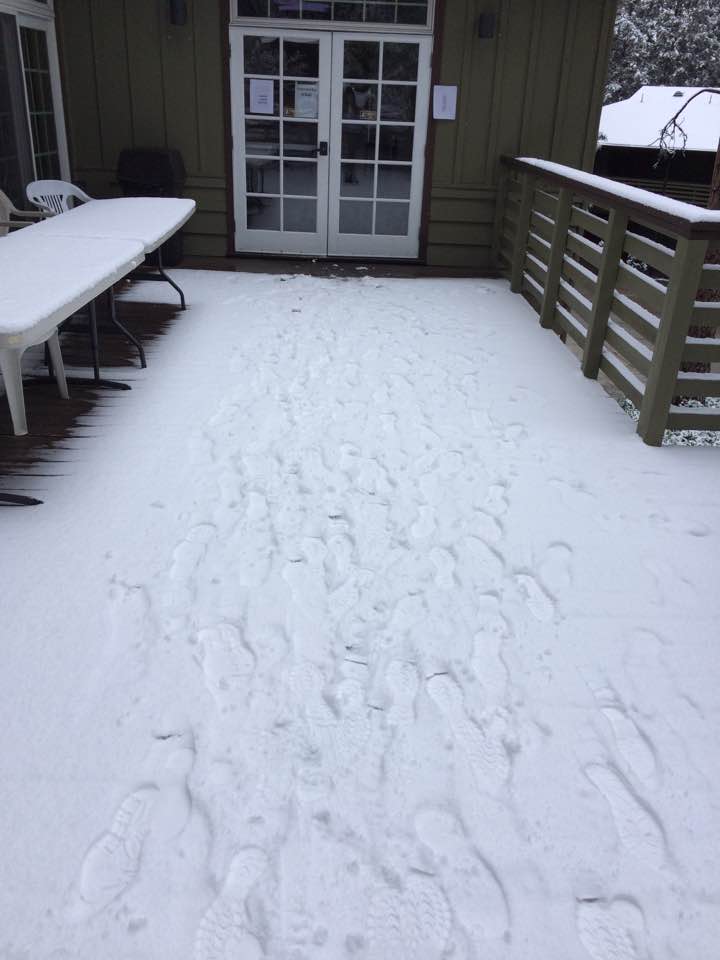
Hikes and writing time were built into our schedule, which provided additional time to share with other writers. Wine and appetizers in front of a roaring fire at a nearby restaurant made us feel like we were in a story. The weather became a main character over the weekend, as we changed from sunny spring weather on Friday to a Sunday morning blanket of snow.

All weekend long, I cherished each stolen moment to revise a few more chapters. With the help of one of the leaders, I reprinted two chapters that I reworked after the first two critique sessions. I worked with a feverish zeal that reminded me of my rough draft days. It was hard to put my computer away.

Suddenly, it was Sunday morning and time for awards. If we chose, we could have submitted our first ten pages for a contest a month before the retreat. A team of published writers and editors judged the manuscripts in a blind contest. The two categories of middle grade and young adult were judged separately, with first place and honorable mention in each. As the leaders announced the young adult winners, I hoped that someone from my critique group would win since the quality of the work shared had been excellent. What I wasn’t prepared for was when they called my name for honorable mention.

As I stood up to receive my certificate in a daze, I realized that my book, almost abandoned for the immediate gratification of shorter articles, deserved to live. The College of the Crones would be finished, but with new direction and inspiration.

After lunch, I headed down the mountain through a snowstorm, eager to get home and continue revisions on my book. Instead of rocks, I had found the gold hidden in my story. If you ever have the opportunity to attend a writing retreat for works in progress, don’t hesitate to sign up. It turned out to be a weekend I will always treasure.


On being published, and how it changed my life

i-am-a-writer

Two years ago, I got sick and tired of my pathetic longing to publish my novel. My book project was only one year into the revised drafts, and I felt like time was running out. Let’s face it –I’m not getting any younger, and if I want to be a best-selling author I need to get my first one on the New York Times bestseller list. So I sent out an army of queries to any agent that represented my genre. My submission spreadsheet grew into several pages with polite rejection notes. The agent I met at a very expensive writer’s conference never responded to my query. I was desperate for a new approach.

My critique group was supportive and gave great feedback, but they were not professionals in the writing industry. I wasn’t going to improve my writing without higher standards. Should I go back to school? Seeking to improve my craft, I enrolled in a local university’s online creative writing program. What I expected was that my writing would be pulled apart, equipped with upgrades, and become the shiny sports car I needed to catch a literary agent’s eye. What I experienced was a barrage of articles about writing that I could have Google searched myself. The students provided feedback on each other’s assignments, although most were not qualified or bold enough to give more than vague compliments. Curiously absent were concrete suggestions from the teacher. Although it was great to have structure and deadlines for creating short pieces, I didn’t really learn anything new.

However I did enjoy discussing the art of writing with other people interested in pursuing a writer’s life. There had to be other writers out there like me that wanted to be taken seriously. So I searched the internet and found the California Writers Club. It was a state club with local branches, so I checked out the Inland Empire Branch. What an exciting moment when I walked into a room with thirty other writers, most full time professional ones, and listened to a presentation about marketing books on social media. These people were living the life I dreamed about! I joined the group, and the members have become some of my dearest encouragers.

One of the club’s suggestions was to set smaller goals along the way to my big goal of publishing my novel. For my WordPress blog, I include articles about riding with my husband in the HOGs (Harley Owners Group). I found a database called Duotrope where you can find submission information for all varieties of print and online magazines and contests. A new submission spreadsheet was begun, and within two months one of my articles, “Backroads to Pioneertown” was accepted into an international travel journal called Coldnoon Travel Diaries. There was no money award, but my work was validated. Buoyed with my success, I continued to submit articles and last month “The Almost Grand Canyon Trip” was published in the literary journal The Courtship of Winds.

            My blog caught the attention of our HOG chapter and I was asked to become the editor of their newsletter The Handlebar Star. My responsibilities include collecting and editing articles written by the club officers and adding my own touches.

Success with my nonfiction writing sparked my creativity toward my novel project. Instead of giving up, I asked for help from my social media audience. One of my Twitter followers agreed to become a beta reader for me, and sent me seven pages of notes and revision suggestions. I was surprised to discover that the roots of my story were still alive, and I am weeding out unneeded sentences and watering my characters. I am learning to persevere in editing, long past the point where I’m in love with any of my sentences.

What began two years ago as a desperate search for help has shown some small victories. I’m not giving up on writing courses yet, although I will do more research on the best programs. Joining a professional writers group has given me a supportive family that helped me discover opportunities I never would have found on my own. And becoming an editor has reinforced the basics that I need to practice.

And so I start this year as a published writer. Did it change my life as I thought it would? Absolutely. Criticism and encouragement have sharpened my writing sensibility and I’m ready to do the work necessary to perfect my writing style. Today I’m even more dedicated to improving my writing and finding new ways to get my stories out to readers.

January Reset Button

retreat


I only have a few more days of winter break to procrastinate about my novel revisions before I return to school. With the New Year comes the reset button, the chance to make this year different than the previous. Feels a bit odd, as it actually hits halfway through the school year, where we’re not resetting anything, but chugging along down the tracks of education toward May state testing. (How many weeks until Spring Break?)

During the eight years we’ve been married, my husband and I hold back from giving each other Christmas gifts each year, especially considering we have six grown children and seven grandchildren. Instead we go away for a weekend in January, press the reset button and reflect on our personal, spiritual, financial, and couple goals. We write our goals down in a notebook and then look back to see how well we’re progressing each year. Some things we write down seem trivial a year later, while others become more focused and urgent.

Some of the goals are wishes, and many of those we’ve seen come true as the years roll by. But it’s not so much whether or not we hit our targets. Each of us has to search our hearts and share our dreams with each other. Saying them out loud gives them shape and writing them down gives them weight. Even if we don’t achieve a goal, we still feel validated by sharing it with each other, and holding each other accountable when needed.

When a couple wants each other to grow into the person they were made to be, it provides a nurturing environment for change. No judgment, only understanding. Forgiveness when needed and grace to cover our shortfalls. Our January reset button has helped us grow as individuals and in our marriage.

Blog at WordPress.com.

Up ↑