The next thing

Ever since two of my books went on submission to publishers, I have felt like I was holding my breath. I knew nothing would probably happen right away. But I still checked my email five times a day. After the first full manuscript requests, I could barely think.

Weeks passed. Months passed. When I checked the Google sheet my agent set up, I could see some rejections with comments. More submissions went out. Those full manuscripts were still out there.

A year passed. Everyone who’s been through this tells you that you should be working on your next thing. Forget about submissions. You can’t control editors and acquisition meetings. Focus on your writing. I completed a new book and took it to my critique group.

In the back of my mind, I kept telling myself I needed to keep my writing time open. When my book was sold, there would be new rounds of revisions. I would be too busy to write anything new. With my mind reeling with possibilities for my debut book, it was hard to generate any new ideas.

More months passed. Maybe my books out on submission would end up dead. I needed to work on the next thing. Before I signed with an agent, I had more patience with the traditional publishing process. It took me six books to land my agent. Somehow, I had mistakenly thought that mean my publishing dream was nearing reality.

Another month passed. Finally, I released my illusion of control over my books. New ideas are flowing. When I lose myself in my newest project, I find myself again.

A creator must create. A writer must write. And no matter what happens, I move on to the next thing.

When rejection becomes inspiration

When I read the comments from an editor I respected and met during a writing retreat, I should have been discouraged. She agreed to read the full manuscript. I had high hopes. But when I opened the spreadsheet from my agent with all our submissions listed, the line with that editor was highlighted in red.

Rejected. But she gave lots of great feedback that threw light on misgivings I’d had about the story. And she was kind, acknowledging my zeal for the subject matter and my personal connection to the plot.

Suddenly, I was energized. I started back at the beginning of the story and cut out the first chapter. I smoothed out awkward dialogue and shortened description. I went deeper into my MC’s thoughts and emotions.

It’s going to take a while for me to get through the whole book, but I’m committed. Even though this is my fifth time editing it, the story is worth it. It was worth a rejection with an explanation, something I rarely get these days.

Creating a book is a collaborative effort. A rejection can sometimes be the catalyst I need.

The magic of feeling “meh”

After the whirlwinds of the holiday season are swept away, I find fewer excuses to avoid writing. I call myself a writer, and there comes a time when I actually need to write. But the muse of January likes to doze and offers little help to rouse me from my warm bed.

There’s writing work to be done. Currently, I’m in the middle of revisions on a YA fantasy novel. And I’ve outlined a new MG book. But it’s dark and cold at 5:00 am. I can’t start anything without coffee. And I need to clean the house. And the dogs need a walk. My ambitions are lulled by solving the daily Wordle puzzle, cuddled up in my favorite chair. Hours pass. Maybe I’ll read instead.

It’s not physical. Unlike my friends, I’ve stayed healthy during the holidays. I’m not fighting a virus or recovering from the flu. However, I can’t escape the sluggish feeling I drag with me throughout the day. Not sick, but “meh.”

Part of the “meh” is waiting for decisions on my two books on submission. Full manuscripts were requested in November for both my YA and MG books. My agent assures me we could wait at least six months to hear anything. Or not get any response at all. After the excitement of signing with a literary agent and getting ready to send out my books, the process of being on submission is “meh.”

Followed by a lot of rush-rush if I’m lucky.

So here I am. Writing my blog instead of working on my book projects. Hopefully, my brain will kick into gear and I’ll have a productive writing day. But probably I won’t. Some words will find their way from my brain to my fingers to my laptop. Tomorrow I might read them and say, “Meh. I can do better.”

But somehow I press on, hoping something wonderful will get through. That’s my job after all. Writing down the words that must be written. Hoping to pull it all together into a book that will be published. Some future January, when I’m feeling “meh,” I can walk into a bookstore and sign copies of my book. The book I persisted to write even when I felt “meh.”

On submission

When your precious children, birthed after years of tears and struggle {otherwise known as your unpublished manuscripts), are out on submission, it feels like you’re in a nightmare. You know the one that cycles over and over again. Every time you reach for the exit door, it opens into darkness. Cruel laughter taunts you. Who do you think you are? You can’t even write a clever Instagram caption.

For years, I knocked on agents’ Querytracker doors, attended writers conferences, and scrolled through MSWL. If I had a literary agent, they would champion my books to editors and escort me through the publishing process. Within months, I would be able to walk into a bookstore and secretly sign copies of my book on their shelf. Kids would cheer me at my school assemblies when I talked about the joys of creating stories.

“I only need one yes.”

That was my whispered prayer when rejection after rejection hit my inbox. Then five books later, when I had almost given up, I got a phone call. And a Microsoft Teams video meeting.

Tia became my agent. After a few rounds of cleanup edits, we started the waiting game again.

“We only need one yes.”

First we sent out my MG novel. A couple of editors wanted to read it. More rejections. The MG market was soft. Then Tia and I revised my YA novel and sent it out. A few editors wanted to read it. More rejections.

“We only need one yes.” But the waiting is a nightmare. Even though I’m working on new projects, there is a certain space in the back of my mind where I hope for the yes. And worry about the no.

Maybe you’re like me, trying to launch your writing career. No matter where you are on your journey, keep pushing forward.

You only need one yes.

The quiet creative zone or what happens after you sign with an agent

For the last eight years, one of my writing goals has been to find a literary agent. Last October, in a surreal moment on my birthday, I got “the call.” Actually, in our post COVID world, it was a request for a Microsoft Teams virtual meeting.

It was really happening.

At the meeting, we talked about ourselves, our dreams, my book. Then Tia Mele made me an offer of representation. Because I still had my book out with other agents, I told her I’d get back to her after I notified them.

After I’d received prompt responses from the other agents, I made my decision. In October 2023, I became an agented author.

I went through two rounds of editing, and then Tia created a Google spreadsheet with the publishers she was sending my book to, similar to my querying spreadsheet. But my querying was done.

Now it was my agent’s turn.

After spending years researching agents, revising my query, synopsis, and pitch, it was someone else’s responsibility.

Now I was free to focus on my writing. At first, it felt weird. Like I should be doing something. In the back of my mind, I realize it’s the calm before the editing storm. But it feels good to take a breath and have more creative time.

If you’re still in the querying trenches, take heart. With a lot of hard work and a little courage, you will find the right person to champion your work.

Message in a bottle

Waiting for a query reply is like being stranded on a desert island after you’ve sent out messages in bottles. As the waves continue to crash onto the shore, you squint against the blazing sun to scan the horizon. Hoping to see the glint of a returning bottle.

Or you check your email box. Twenty times a day.

Experienced writers advise you to start a new project. Ignore the fact that somewhere, someone is looking at your synopsis and deciding whether you’ll fit into their client list. If they even read it. Waves of anxiety crash against your overconfidence. Maybe your book wasn’t ready. Maybe your critique group doesn’t want to hurt your feelings.

Maybe your voice doesn’t matter.

This world doesn’t seem friendly anymore. Social media isn’t fun when every comment you make could be used against you. All your writer friends are being published. Everyone in your family is being published, even if they’re not writers.

Even a message asking for revisions would be a victory.

All you can do is on the beach, watching the waves crash against your dreams. Then you notice a seagull creeping up on the sand. It stares at the sandwich in your hand, cocking its head back and forth. The bird hops a little closer, reminding you of that boy in sixth-grade, the one who always wolfed down the hated liverwurst sandwich Mom packed for you.

Ideas flood your mind. Jumping up, you brush off sand and head to your laptop. As you furiously type away, you can still barely hear the waves in the background. You’ll check your email box later, but for now, the magic still works.

Then a bottle washes up on the sand.

The Itsy-Bitsy Spider

Rain has been pounding on my roof all night. And most of yesterday. Today it’s going to be the same. I’m stuck inside my house, longing to stretch my legs and feel sunshine on my face.  

Storm after storm after storm. No chance to catch my breath.

I’m not the only one who’s gone through storms over this holiday season. Each person has their own storms to face. To someone else, my problems would only be annoyances. For me, as each problem piles on top of the next, it becomes mind-numbing.

Incessant rain. Grey, swollen skies that hold the day captive.

My creativity is held captive with the California sunshine. My hands hover over my laptop keyboard yet nothing is typed on my screen. Maybe the query rejections were right. Maybe writing a novel is too hard.

Maybe my story is not important.

My responsibilities come tumbling out like junk out of a woman’s purse. Days fill up with important tasks. People I care about need me. When things break, it takes time and money to fix them.

Cars drive by my house, splashing up water from the gutters.

An email arrives. A short story I wrote last year was shortlisted for a fiction contest.

Silence catches my attention. The rain has stopped.

Maybe I can write a story that is important.

My hands fly over the keyboard. Characters, storylines, wonderful places flood my mind. When my stolen moments pass, the story takes hold in my mind and rests there, waiting for my next writing time.

Out comes the sun and dries up all the rain.

And the itsy-bitsy spider climbs up the spout again.

Today She Needs to Write

Homework, Girl, Education, Studying, Student, School


A short story about a short story.

When I announced to my third grade class that one of my Harley stories was going to be included in an anthology coming out next month, a serious-looking girl in the second row shot up her hand.

“Did you have a question?” I asked.

“How long did it take you to write the story?”

Hmm. I knew this student loved to write in her journal, and her quick write responses often filled the entire page. Adults who share my writing addiction know that years can pass before a story or book is exposed to the light of publication. Would my answer cause her to close her journal and pursue another dream?

How long did it take?

Last fall I went on the Harley overnighter that became the subject of my story. When I returned, it was back to my normal life as a teacher. (Often I have compared my life to Indiana Jones, especially the part where he has to go back to his job as a college history professor after outrunning the Nazis.) A few months passed before I found time to sit down and think about that adventure.

Actually writing it didn’t take more than an hour. I read through it, adding and deleting for another half hour. After I thought it was finished, I sent it out with my other submissions, the dark hole where you rarely find out your story’s fate. Meanwhile, some of my other short stories were accepted into online magazines. Nothing for that story. I took UCLA extension classes and worked on my YA novel.

Early in the summer, I heard that my California Writers Club branch was going to publish their first anthology. I took back out that Harley story, edited it again, and submitted.

That story was accepted into the book. The editor wanted some minor revisions. Five months later, the book is almost ready to come out.

So how did I answer? My smile reflected in her eager eyes, I replied, “Only about an hour.”

She’ll find out about the rest someday, but today she needs to write.


On being published, and how it changed my life

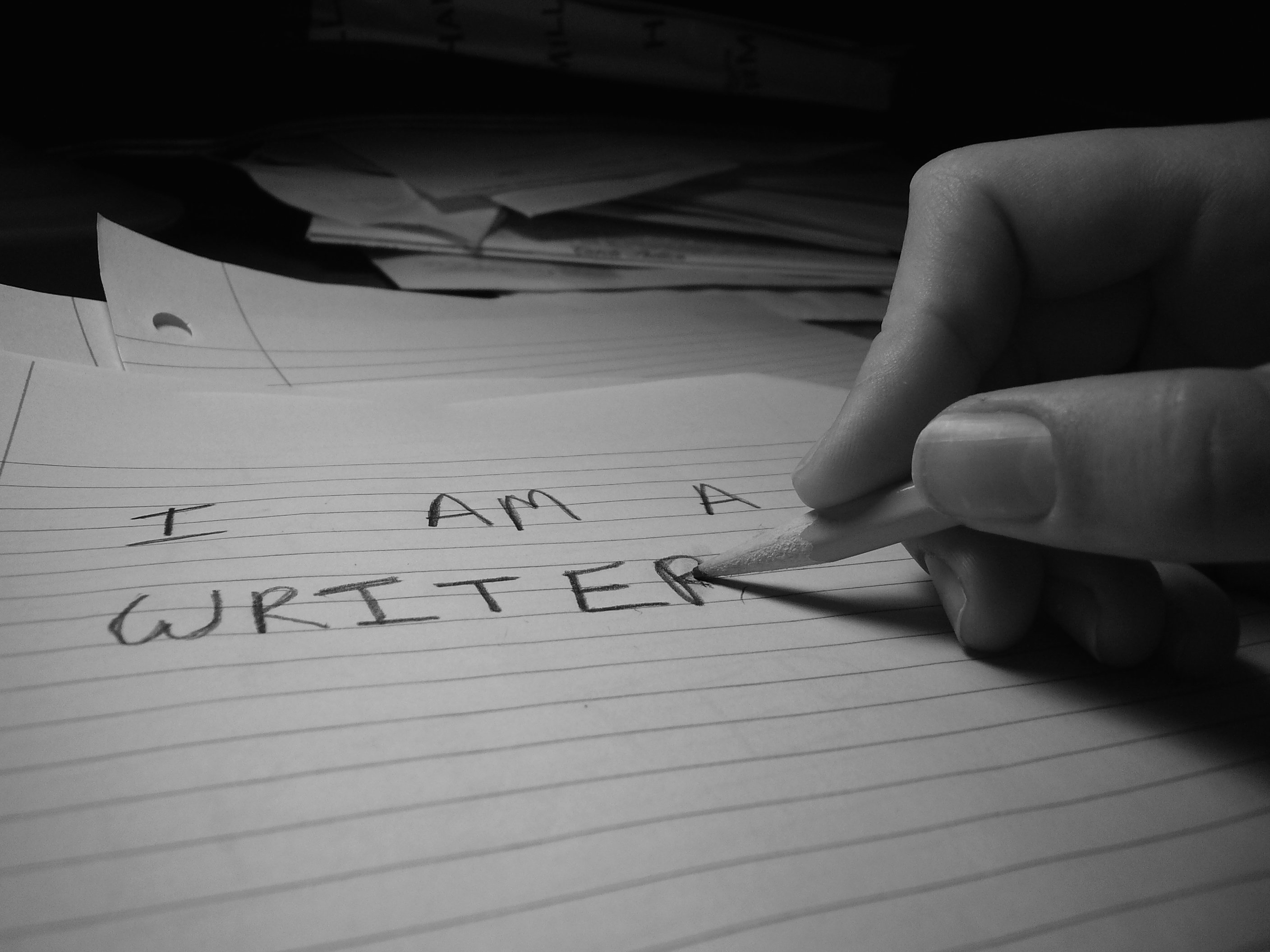
i-am-a-writer

Two years ago, I got sick and tired of my pathetic longing to publish my novel. My book project was only one year into the revised drafts, and I felt like time was running out. Let’s face it –I’m not getting any younger, and if I want to be a best-selling author I need to get my first one on the New York Times bestseller list. So I sent out an army of queries to any agent that represented my genre. My submission spreadsheet grew into several pages with polite rejection notes. The agent I met at a very expensive writer’s conference never responded to my query. I was desperate for a new approach.

My critique group was supportive and gave great feedback, but they were not professionals in the writing industry. I wasn’t going to improve my writing without higher standards. Should I go back to school? Seeking to improve my craft, I enrolled in a local university’s online creative writing program. What I expected was that my writing would be pulled apart, equipped with upgrades, and become the shiny sports car I needed to catch a literary agent’s eye. What I experienced was a barrage of articles about writing that I could have Google searched myself. The students provided feedback on each other’s assignments, although most were not qualified or bold enough to give more than vague compliments. Curiously absent were concrete suggestions from the teacher. Although it was great to have structure and deadlines for creating short pieces, I didn’t really learn anything new.

However I did enjoy discussing the art of writing with other people interested in pursuing a writer’s life. There had to be other writers out there like me that wanted to be taken seriously. So I searched the internet and found the California Writers Club. It was a state club with local branches, so I checked out the Inland Empire Branch. What an exciting moment when I walked into a room with thirty other writers, most full time professional ones, and listened to a presentation about marketing books on social media. These people were living the life I dreamed about! I joined the group, and the members have become some of my dearest encouragers.

One of the club’s suggestions was to set smaller goals along the way to my big goal of publishing my novel. For my WordPress blog, I include articles about riding with my husband in the HOGs (Harley Owners Group). I found a database called Duotrope where you can find submission information for all varieties of print and online magazines and contests. A new submission spreadsheet was begun, and within two months one of my articles, “Backroads to Pioneertown” was accepted into an international travel journal called Coldnoon Travel Diaries. There was no money award, but my work was validated. Buoyed with my success, I continued to submit articles and last month “The Almost Grand Canyon Trip” was published in the literary journal The Courtship of Winds.

            My blog caught the attention of our HOG chapter and I was asked to become the editor of their newsletter The Handlebar Star. My responsibilities include collecting and editing articles written by the club officers and adding my own touches.

Success with my nonfiction writing sparked my creativity toward my novel project. Instead of giving up, I asked for help from my social media audience. One of my Twitter followers agreed to become a beta reader for me, and sent me seven pages of notes and revision suggestions. I was surprised to discover that the roots of my story were still alive, and I am weeding out unneeded sentences and watering my characters. I am learning to persevere in editing, long past the point where I’m in love with any of my sentences.

What began two years ago as a desperate search for help has shown some small victories. I’m not giving up on writing courses yet, although I will do more research on the best programs. Joining a professional writers group has given me a supportive family that helped me discover opportunities I never would have found on my own. And becoming an editor has reinforced the basics that I need to practice.

And so I start this year as a published writer. Did it change my life as I thought it would? Absolutely. Criticism and encouragement have sharpened my writing sensibility and I’m ready to do the work necessary to perfect my writing style. Today I’m even more dedicated to improving my writing and finding new ways to get my stories out to readers.

The Rebel Mind

“You can’t make me!” This is the battle cry of children of all ages when confronted with brussel sprouts or taking a bath or cleaning up their rooms. Parents clench their teeth and use their superior logic to force compliance. The brussel sprout disappears into a napkin, and the adult enjoys a false victory. But the rebel never ceases to find opportunity to object against anything that is required of her.

Then adulthood changes everything. The rebel discovers no ones cares if she stays out until dawn. No one makes her wash the tower of dishes in the sink. No one forces her to make her bed before company comes over. This absence of tension confuses the rebel who enjoys conflict. The quiet voice of responsibility is no substitute for loud voices and slammed doors.

The rebel is driven outward to find a cause. If her apartment building forbids pit bulls, she has to have one. If the parking sign says 20 minutes, she leaves her car there for hours. Of course she smokes even though it will probably kill her. She loves to jaywalk and jump over “Do Not Walk on the Grass” signs. Speed limits and traffic lights are for submissive slaves, not her. Instinctively she finds ways to rebel against the parents that no longer lurk over her shoulder.

The only parent the rebel must still contend with is Her Creator. As a child, she readily accepted that God made her and loved her. Some of His rules, like not murdering or stealing, sounded good. When she was caught in rebellion, it was a comfort to know He forgave her. But a moral life? Too restrictive. Instead she went her own way, doing what seemed good to her. What made her happy.

Years later, the rebel is alone. Her selfishness cost her everything. As her best plans collapsed in ruins, she knows there is only one person to whom she can turn. Entering the church building she has scorned for most of her life, she brings her white flag to the altar.

ssplash 008

Blog at WordPress.com.

Up ↑