
Order from Wolfsinger and get 25% off. My story “Skulls on the Shelf” is included in this anthology.
https://www.wolfsingerpubs.com/shop
Use the code NewReleaseWitch when you check out for the discount.
Writer and Rider
Order from Wolfsinger and get 25% off. My story “Skulls on the Shelf” is included in this anthology.
https://www.wolfsingerpubs.com/shop
Use the code NewReleaseWitch when you check out for the discount.
Check out my short story, “Skulls on a Shelf” in the anthology Never Cheat a Witch. You can buy it in Kindle or paperback on Amazon. You’ll never feel the same about DIY craft projects.

The tiny, shriveled blooms collecting in my swimming pool tell me change is on the way.
Although the sun still sends a trickle of sweat down my cheek, twilight approaches sooner every day. I still wear shorts. The air conditioner still rumbles. But there is a promise of cooler days to come.
If I were back in the state I was born, leaves would turn yellow, red, and brown before swirling to the ground. The wind would have a cool bite. But here in California, the elms in the front yard shed their leaves, but the citrus trees hold theirs green. Nights will be slighter cooler, though not enough to get a jacket out of the closet.
But no one can escape change, not even Californians.
Hope and dread war in my heart. How reassuring would it be if everything stayed the same. As I look around, change never stops. Majestic mountains are brought down, rock by rock. Rivers carry garbage to the ocean. Forests are devastated by raging fires, and farmlands drown in floods. Natural wonders are shadows of their original untouched beauty.
As the years pass, I also cannot escape the ticking clock of time. New wrinkles, grey hair, dental work, aching joints. They remind me that my body has an expiration date. And I can’t renew my extended warranty.
But as the Californian rock band, Switchfoot, wrote, “this skin and bones is a rental.” When my travels on Earth are over, I will move to a more beautiful place. A place not touched by viruses or pain. A place where beauty cannot be corrupted.
So I mourn not for what is lost. Instead, I smile to see piles of elm flowers crumbled in the street. They are my promise that change is coming, and someday I will be home.
The tiny, shriveled blooms collecting in my swimming pool tell me change is on the way.
Although the sun still sends a trickle of sweat down my cheek, twilight approaches sooner every day. I still wear shorts. The air conditioner still rumbles. But there is a promise of cooler days to come.
If I were back in the state I was born, leaves would turn yellow, red, and brown before swirling to the ground. The wind would have a cool bite. But here in California, the elms in the front yard shed their leaves, but the citrus trees hold theirs green. Nights will be slighter cooler, though not enough to get a jacket out of the closet.
But no one can escape change, not even Californians.
Hope and dread war in my heart. How reassuring would it be if everything stayed the same. As I look around, change never stops. Majestic mountains are brought down, rock by rock. Rivers carry garbage to the ocean. Forests are devastated by raging fires, and farmlands drown in floods. Natural wonders are shadows of their original untouched beauty.
As the years pass, I also cannot escape the ticking clock of time. New wrinkles, grey hair, dental work, aching joints. They remind me that my body has an expiration date. And I can’t renew my extended warranty.
But as the Californian rock band, Switchfoot, wrote, “this skin and bones is a rental.” When my travels on Earth are over, I will move to a more beautiful place. A place not touched by viruses or pain. A place where beauty cannot be corrupted.
So I mourn not for what is lost. Instead, I smile to see piles of elm flowers crumbled in the street. They are my promise that change is coming, and someday I will be home.
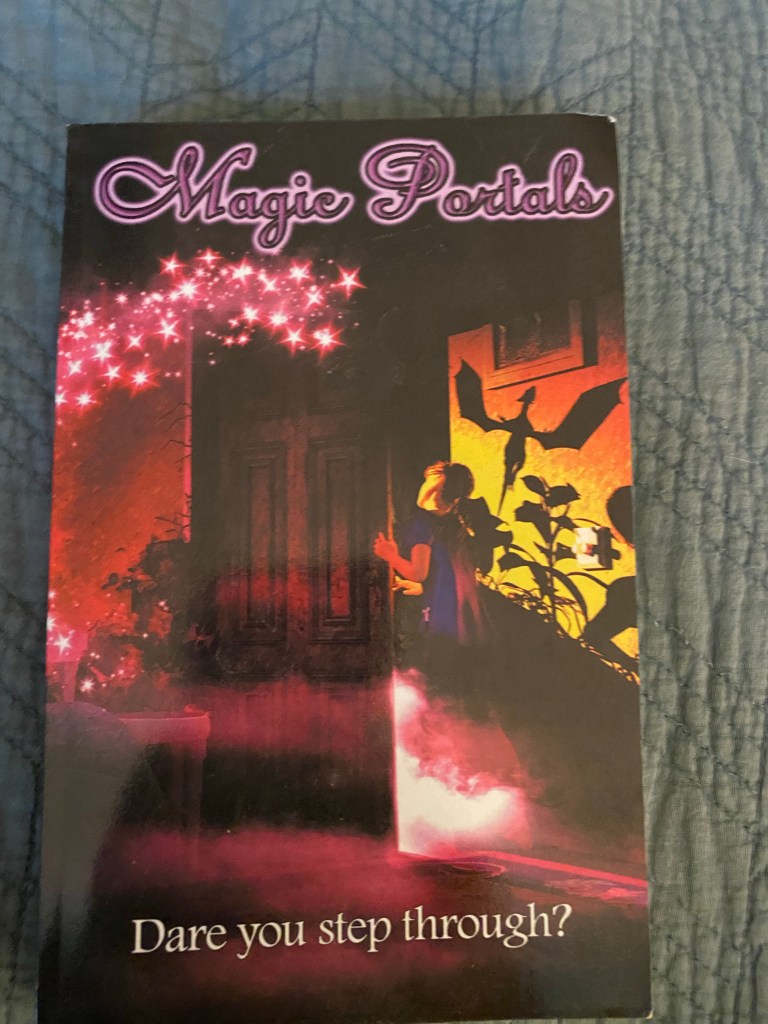
My short story “Sea Cave” appears in this collection of magical stories. Get your copy on Amazon or Barnes and Noble.
https://www.barnesandnoble.com/w/magic-portals-james-rumple/1141517695
https://www.author-author.net/product/26212/Magic-Portal-Anthology
You can find my short story “Sea Cave” on Amazon or Barnes and Noble


Violet did everything right.
Every week, she created 10 TikTok videos, posted 21 pictures of her meals on Instagram, and liked all her friends’ memes on Facebook. She answered every text and email immediately upon receiving them. All her friends loved her.
Not only did Violet do everything right, but she also had the right job.
She only drove to the office once a week. The remaining days she worked from her spare bedroom in her tank top and yoga pants. Her colleagues lived around the world, creating ad campaigns for top companies. All her friends envied her.
In addition to doing everything right and having the right job, Violet had the right boyfriend.
Anthony was a firefighter, with tousled raven-colored hair, the kind you wanted to run your fingers through. In fact, he was so hot he was hired to pose for a firefighter calendar that benefited families displaced by wildfires. All her friends loved him.
And yet, Violet did not feel right.
She felt like social media dictated what she should wear and care about. Her bosses expected more from her since she worked at home, so often she worked all night. Anthony worked long hours during the fire season, so he felt like she should run his errands and be available to him without any notice.
She suspected she might need to get rid of some things in her life so she could feel right. She turned off her TV and computer. She deleted her social media accounts. She quit her job and started working at Starbucks. She broke up with her firefighter boyfriend. Her friends pushed each other out of the way to try to date him. Although she was surprised she didn’t care that much about losing these things, she still didn’t feel right.
Violet starting writing again, and that felt right.
Years ago, she loved writing horror stories, but her life became too busy and too right. She pulled her old stories out of the desk drawer and revised them. Then she submitted them to magazines who eagerly accepted them for publishing. She started working on a children’s book. It was about a little girl who was surrounded by adults that told her what she should do. The little girl ran away into the forest, where she ended up living happily in a tiny cottage with her pet rabbits. When the book was ready, she submitted it to a literary agent who loved it so much, she signed her that day.
Violet started to feel right.
She wore clothes that looked good and felt right on her. Her job at Starbucks paid the bills so that she could write books when she got home. She even met a guy at her first book signing who seemed right for her. He was smart and creative. He wanted to start his own publishing business and publish all her books. He did things for her, and that felt right.
Even though Violet felt better, she still knew she wasn’t right. She bought a Bible from a used bookstore. Every night, she would read a chapter before bed. After a while, she understood what she needed to do.
She started attending a church down the street from her house. The pastor said things that didn’t make any sense, like giving money to the poor and caring about people who were not right like her. This intrigued her so she decided to find out more. She bought a Bible from a used bookstore and started to read. The words were different from all the things she had heard online and from her friends.
That’s how Violet finally found out how to be right.

Unless you are a teacher, you will never experience the mystery of summer vacation.
The school year grinds relentlessly through your calendar for ten months. Deadlines loom like boogie men. State tests. Report cards. Awards. Room inspection. Then one day, you leave your key with the school secretary and walk out to a new world. Your chest relaxes and you can breathe. The sun smiles at your secret summer plans, and for a moment you forget that it will burn you. You don’t realize that you have started to giggle, causing others around you to stare.
Except other teachers, who share a secret smile.
During summer vacation, mornings are quiet and leisurely. Birds chirping outside are the only ones busy at work. When you finally roll out of bed and stretch, the sun is well on its daily trek across the sky. Devotion time is not rushed. Coffee is savored. Plans for the day include reading on a lounger in the pool. No grading papers. No staff meetings.
The first few days are a blur. Your mind is resetting itself for summer mode. But after a while, you notice other people racing around in their cars during the day, especially in the morning and early evening. That’s right! You forgot that other people go to work. In the back of your mind, you know that you’re only on summer vacation for ten weeks, but now you can only see empty, uncommitted squares on your calendar.
However, you are a teacher, so you have made plans for some of those days. Beach trips, camping, visiting relatives. But those events are not squeezed into the school year, so your forehead doesn’t wrinkle when you think about them. You’ll have plenty of time to shop and pack in the days to come.
Weeks go by. Smiling comes easy. Your family enjoys your company. Your dogs wag their tails at the door as they wait for their morning walk.
As July comes to an end, anxious thoughts poke their way through your summer brain. Will I have a good class this year? Will our principal do that same old team building activity during our first staff meeting? You rebuke these thoughts as it is not time yet.
Then a letter arrives. Your spouse laid it on the kitchen counter without a comment. You pick it up with trembling hands because you know what it means. Your principal sends it every year.
The dreaded Welcome Back to School Letter. With all the dates for meetings and days you can get your key to work on your classroom. Each line cuts into your soul.
Summer is almost over. Frantically, you try to jam in as many activities as possible before your report back date. Your smile is fading now. Your laugh sounds a little forced.
And just like that, summer vacation is over. How can you walk away from your school building one moment, and then in the blink of an eye, you’re back stapling up new paper and counting out school supplies?
A mystery no scientist has ever solved.

Attending my first in-person writing retreat after the pandemic was like a dream. The Society of Children’s Book Writers and Illustrators had been forced to hold virtual events for the past two years. This year we were back. A few weeks ago, twenty-five writers, editors, and agents met in the San Jacinto Mountains face to face.
We slept in tiny cabins at Tahquitz Pines Conference Center in Idyllwild, California. Our meetings were held at a lodge nestled in the tall trees. The weather was perfect for hiking, 70s in the daytime, 50s at night. Meals were served in a cafeteria. Staying there evoked memories of childhood summer camp.
During four magical days, I fellowshipped with other writers. Real people like me who sit in front of a computer and type out stories. A few still wore masks, a lingering reminder of the past two years. At first, it felt awkward sitting and talking to people, but as days passed, it seemed like COVID never happened.
The days leading up to the retreat, I was terrified. I was bringing a brand-new story to my critique sessions, raw in its first draft. During Zoom critiques, I could turn off my camera if I didn’t want anyone to see my reactions. Now I sat at a round table under the gaze of six other writers and an editor. Nowhere to hide. Then I noticed everyone else seemed a little nervous, too. We were all eager to share our work yet afraid it was not enough.
Once we started, it grew easier. We became invested in each other’s characters. We celebrated beautiful imagery and clever dialogue. We discussed how the story could be improved.
Outside the four critique sessions, we had time to stretch our socialization legs. Some worked on revisions in the lodge. Others hiked the forest around us. A few rested in their cabins.
We ate together. We shared. We laughed.
We highlighted. We questioned. We encouraged.
And when our days were completed, I drove back down the mountain to my normal life. Not alone revising my story for the tenth time, but part of a supportive group that lifts me up above the silent negativity that slays books before they’re written.
That’s how a retreat can push you forward.

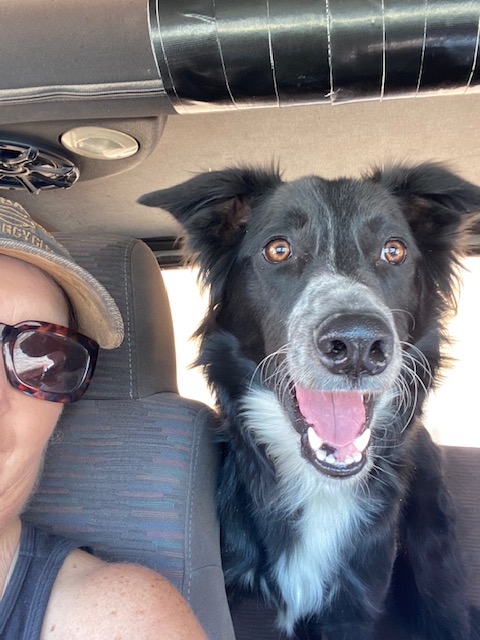
After our first Jeep trip to the Salton Sea, I thought our Wrangler was invincible. My husband, Frank, and I rode through sand, rocks, ditches, and narrow squeezes as easy as driving the freeways of Southern California. Sometimes even at the same slow speed.
The next trip we camped near Anza-Borrego State Park. The other four-wheelers with us had brand new Broncos and a 2003 tricked-out Rubicon. We were a little outclassed. Our 2004 Wrangler had 32” tires but otherwise was stock. However, we weren’t too concerned. The trails we planned were considered “easy” and “moderate.”
A few hours into the ride, Frank and I sat eating sandwiches inside our Jeep looking up with regret at our crew perched on the mountain.
Our day started out easy enough. Our group of four vehicles entered the windswept sandstone canyon and followed a creek bed. At first, we saw regular motorhomes and four-wheel drive trucks camped under the shade of the canyon walls. Other Jeep groups and single off-roaders passed by on this main part of the trail. I wouldn’t have camped there with all that billowing dust.
As the canyon walls closed in on us, we still saw a few Jeeps and trucks with popup tents on top of them. Full camping kitchens were balanced on rocks. People sat under EZ up canopies to block out the unrelenting sun. The trail became narrow with sharp rocks that poked out of the sand, waiting to pierce our tires.
We kept up with the rest of our group despite our lower stance. Jeff, our experienced leader, turned off the main trail and headed up a side wash. The rocks were a hand’s touch from the sides of our vehicles, especially the wider Broncos. We crawled over the boulders and inched past the protruding edges of the canyon walls.
The trail turned sharply to the left. A sandy trail led straight up the face of a cliff. There were many tire tracks showing the success of others before us. We all stopped and allowed each vehicle to climb the mountain alone in case they had to back down and try again.
Jeff in his Rubicon made it up there easily. Then one of the Broncos scaled it. It was our turn. Frank adjusted his gears and gave it some gas. I hung on and closed my eyes. We bounced up to the top. I turned toward our dogs in the back, and our border collie, Davey, had a wild look in his eyes. Our beagle, Harley, was buried in the seat.
Our group joined several Jeeps that were parked on a flat mesa overlooking the mountains and desert. We got out and took a break, talking about our next move. Should we go down and try another branch of the canyon? Above us was another trail that went up onto a sandstone ridge. I could see a few Jeeps parked up there. We decided that would be our lunch stop.
Jeff found the trail leading up and we followed slowly. The side of the cliff was deep soft sand with patches of rock. Frank and I got stuck a couple of times and had to drop back and try it again. One last section remained before the top.
Jeff parked and stood out on a rock with his radio so he could spot us. Our first Bronco went up and got stuck. Jeff gave him directions on the radio, and with a few adjustments he was up the hill. From our viewpoint, his wheels were all twisted different directions as he clung to the uneven surface.
It was our turn.
Starting on soft sand made it hard to get up the speed we would need. Frank threw it in low gear and we shot up. Near the lip there were several deep ditches close together. We hit the first one.
Clunk! Spin! We were stuck. Frank threw it in reverse and tried it again. Clunk! Spin! Jeff offered suggestions which we tried unsuccessfully.
We were too low to navigate the ditches.
Frank backed down and found a place out of the way of the other Jeeps coming behind us. The last Bronco in our group made it up the hill. I stepped outside to give the dogs a break, but heat radiated off the deep sand and the dogs were not interested. We decided to stay inside and eat our lunch.
After a while, Jeff radioed us that the group was coming back down. We joined them and completed the rest of the trip.
Were we disappointed? Yes. Were we embarrassed? Not really. Our friends are people we’ve ridden Harleys with for years. There was no condemnation. You ride your own ride.
Back at camp, we talked about our favorite parts of the day. Red rock sculptures and vast desert vistas unseen by regular roads. Old rusted minecart trestle covered in bright colored graffiti. Groups of people gathered to shoot their guns at a desolate mountain. A tiny bar filled with thirsty off-roaders.
Tomorrow we would go back to our regular lives, but for this weekend we were explorers and adventurers.
And I would have to complete a few more days of substitute teaching to pay for upgrades to our Jeep.
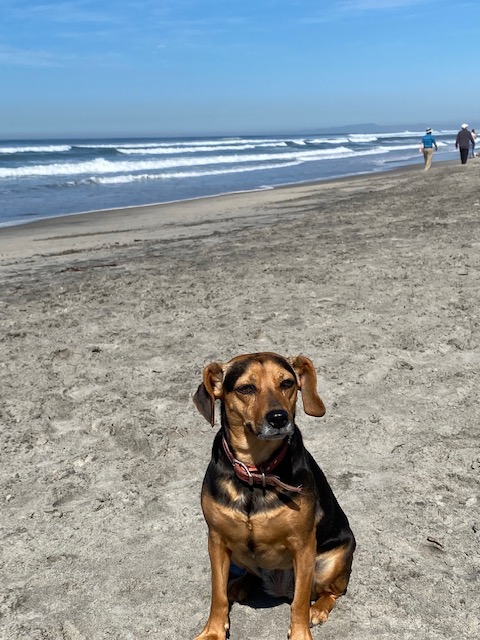
The shy March sun caressed my bare shoulders as we waded through dry sand. I held our beagle’s leash firmly even though we were on the dog beach. It was Harley’s first experience around other off-leash dogs. She stayed at my side, her brown eyes wide and her tail hooked down in the question mark position.
The shoreline was a flurry of activity. Dogs dashed past into frothing waves. Owners threw frisbees and balls. Tails wagged and rear ends were sniffed. My husband and I found a spot at the edge of the wet sand and set up our chairs. I held my breath and unhooked Harley’s leash, wondering if she would run off. She cowered behind my chair.
The sky was brilliant blue and clear of clouds, although helicopters made regular appearances as they monitored the coastline. The sand and breeze were cool, balancing out the relentless rays of the sun. Not quite swimsuit weather for me, although some of the other beach goers didn’t shy away from them.
A white Lab trotted over to check us out. His friendly face convinced us to allow him to approach Harley. Our beagle froze in place while the dog sniffed her. Whew! We made it through one encounter.
To our left, someone had left their towel and bad in the sand while they were at the water. Two dogs came up to sniff around it. One raised his leg. A woman in a bikini shouted at them and they scattered. Harley watched intently.
Another group of dogs flew past us and circled around to that same towel and bag. Barking madly, Harley jumped up and raced over there to chase them off. I called her and she returned, proud of herself.
It was a pleasant morning watching dogs enjoy themselves. Smiling and panting, soaked with sea water, they raced up and down the water line. The owners actively supervised their dog children to prevent fights. Harley didn’t join in, but she watched.
After a few hours, our pink skin convinced us we’d had enough sun for the day. As I clipped on Harley’s leash, she held me with her sad eyes. We walked toward the Jeep, half-dragging her with us.
Maybe next time she’ll be ready to join the fun.

