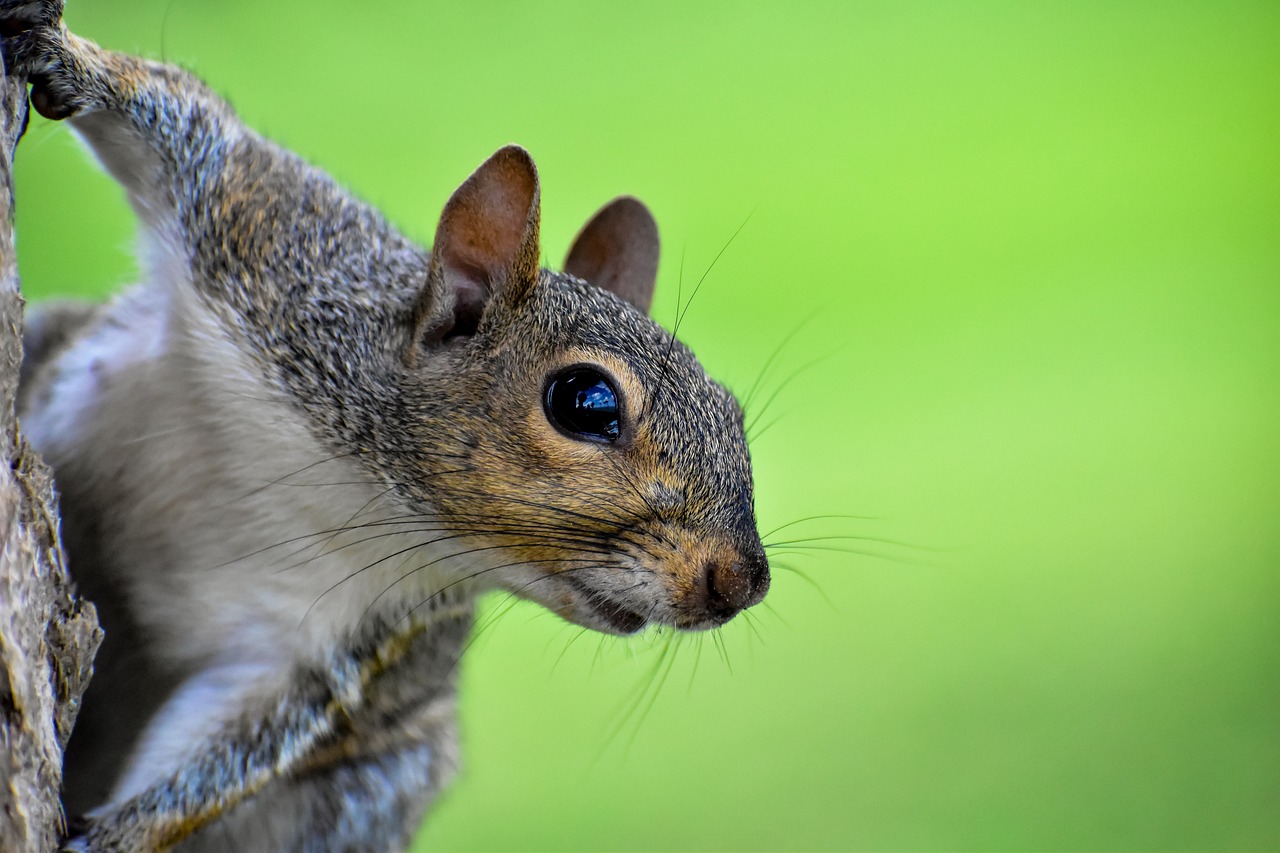
The Squirrel on the Wire

I have sassy squirrels in my neighborhood. The past few days I’ve had to bring my border collie, Davey, inside the house in the morning because he can’t stop barking at the tiny creatures.

The homes in my block were built in the late 1940s, back in the days when trash trucks picked up your cans from a network of back alleys. These narrow roads provide the route for our electric, phone, and cable since they were put in before the days of buried lines.  

Squirrels love to use electric lines as their personal bridges between the trees in our backyards. Davey notices everything, including the furry animals passing over his head. They cause him to bark like a vicious wolf since he believes the alley and its airspace are part of our property.

This makes the squirrels bolder, as they sit directly above Davey’s head, staring at him and twitching their tails. How they manage to balance on the wire is beyond my understanding. It’s fun to watch Davey and the squirrels interact, except for the part where he’s waking up the whole neighborhood.

Davey always barks and jumps at the squirrels, even though he never can reach them. He never gets discouraged. He never gives up. Even if he never gets his teeth on one fluffy tail, he will always try.

Seeking to get my first book traditionally published is like that. Those book deals sit up on the electric wire, taunting me with their advances, book tours, and international rights. There I am, on the ground, barking to get an agent or editor’s attention. Every day I get up, check my email for requests for pages. After sending pages, I stare at my phone, waiting for the Call.

Every day is the same. The squirrels tease Davey. He barks like a wild dog. My email inbox fills with rejections. The Call never comes.

It would be easy to get discouraged. No one would blame me for giving up. But I’m inspired by my border collie’s dedication to his job. He knows what he’s born to do.  

Even if I never get my teeth on a book deal, I will always try.

Expecting the Write Things

As I hang on the edge of another writing retreat, I consider my expectations. This week, I will attend the SCBWI Writing Retreat in the San Bernardino Mountains, near Lake Arrowhead. Last year was our first in-person event since the pandemic. Last year was all about being in the presence of other writers, allowing their creative energy to infuse with mine.

I wonder what will happen this year.

Since the retreat is built around critique groups and writing time, I know I’ll spend a lot of time working on my book. My story has already been shaped by my other critique group, so I will need to concentrate on final revisions.

After attending this retreat for many years, I know the true magic happens when you’re eating breakfast and talking to the agent or editor at your table. Insight flashes between writers when we’re toasting at happy hour. The opportunity to have a fifteen-minute coaching session with a publishing professional is priceless.

In the first years I attended, I would drive up to mountains holding my breath. This would be my big break. I would meet the agent of my dreams. She or he would email me a contract when I got home. My writing career would be officially launched.

But I didn’t know what I didn’t know. My finished book projects needed more than properly placed commas. My plots needed more emotional depth. My endings needed to be more satisfying.

Years later, I will drive up the mountain with more realistic expectations. But my heart will still beat wildly when I arrive at the cabins. I will warmly greet our guest agents and editors. I will enjoy the company of my writer friends. I will take a deep breath of cool, pine-scented air.

Anything could happen.

Books are better

As I scroll through my streaming channels, looking for a TV series I haven’t watched twice already, I realize a great truth.

Books are better.

Books are better because on my Kindle, there is an endless supply of new stories. This is helpful when you finish a book at 3:00 am.

Books are better because I can skip over the boring parts. Or linger over the marvelously crafted ones.

Books are better because if I don’t like where the author is taking me, I can close the book.

Books are better because the way the characters look in my head is way more accurate than the actors chosen for the TV show.

Books are better because sometimes you can actually meet the author at a book signing.

Books are better because you get to know the characters in greater depth, including things they are too polite to say out loud.

Books are better because even if you are sitting in a hospital waiting room, you can escape to the Shire and have cake at Bilbo’s birthday party.

Books are more reliable to convey the author’s message. Even though there have been some great adaptations of books into TV shows and movies, most readers agree something is lost along the way.

And one last reason—reading great books inspires me to write my own.

That’s why if I’m not writing at my laptop, you’ll find me reading a book.

While I’m busy blowing up the end of my novel

Have you ever decided to become an expert at something, only to find out the more you spend time doing it, the less you actually know about it?

In my earlier years, I was a visual artist. For most of my childhood, I expressed ideas through drawing and painting. My first degree was a BFA in Fine Arts. But after college, real life intruded, and I had to make money. My creativity was expressed in clothing displays and sale setups. I continued to draw and create intaglio prints at the local community college.

Then came motherhood. My creativity emerged in birthday cakes and scavenger hunt parties. My creative genes were passed down to my youngest, who although she drew and painted, she preferred photography and video.

When the retail industry choked after 9/11, I went back to school to become an elementary school teacher. In my classroom, my creativity generated bulletin boards and diagrams of the water cycle. When I took on the after school musical theater program, I created backdrops and sets.

After my husband suddenly died, writing became my comfort. I could write about my characters’ struggles and pain easier than my own. Although I’d always written short stories, I had my heart set on novels.

How hard could it be?

Years later when I retired, I imagined I would crank out novels every year to make up for all those earlier years with no time for writing. My short stories appeared in anthologies. I got my first writing advance ($15).

After I finished three novels, I began to send out query letters and sample chapters. My heart was set on traditional publishing, so I knew I needed a literary agent. As the form rejections rolled in, I realized I didn’t know as much about writing as I thought I did. It wasn’t just about having a great story idea. I was responsible for creating character arcs for all my major players, as well as the villain. Novels had to be divided into acts and move at a certain pace. Forget the glorious description of the setting. You needed to blow things up.

 How could I get better?

I took classes. I attended writing conferences. I hired editors. But the most helpful step was joining a critique group. It would take a long time to go through my novel in a critique group, but it was well worth it. After three years, we finally reached the ending of my novel. My faithful critique group tore it to shreds. They had permission to do so, as they had lived with my story for a long time.

 Who knew endings were so hard? I made some corrections and resubmitted to my group. Still it wasn’t enough. Or rather it was too much. Apparently, I had another entire novel embedded in it.

I can’t help it if I keep coming up with new great ideas.

After much soul-searching, I now sit in front of my laptop, cutting chapters and characters, trying to salvage my novel. I’ve learned a lot. My next novel will be so much better.

 As of this date, I haven’t deleted this story yet. The revision process may be painful, but it is a good teacher. You can read all you can about how to write, but in the end, you have to go through the process yourself.

And blowing up the ending of your book is a great way to learn.

“An Android Goes to School” published in Backchannels Literary Magazine

My short story, “An Android Goes to School,” is currently featured in Backchannels Literary Journal Edition 11. This story was inspired by a writing prompt given at a SCBWI writing retreat, so keep all your writing exercises and activities. You never know when they might inspire you.

Follow the link below to read the story:

/https://backchannelsjournal.net/edition-11-fiction-edition-winter-2023/an-android-goes-to-school/

Writing in the Dark

Writers often complain about finding more writing time in their day. As a retired teacher, I thought I would have endless hours to type on my laptop, scribble outlines into notebooks, or muse about new story ideas. Instead, my schedule filled up quickly. I have heard it said, and now understand: “I am busier now than when I was working full-time.”

So I returned to my old writing time. It’s hard to turn off the alarm at 5:00 am and jump out of my warm bed. I’m not working. Why would I get up so early? I’ll admit sometimes I’ve hit the snooze button and gone back to sleep. But when I got up and grabbed my coffee, I’ve never regretted it.

Early morning. The perfect time to write. It’s so quiet I can hear my brain work. My husband and dogs are asleep. No daylight beckons me to go outside. Too early to do laundry or mop the floor.

My mind is a blank slate, not yet overloaded with the day’s problems and responsibilities.

Ideas flow. Possibilities seem endless.

Getting up that early may not work for you. You may prefer the dark hours of the evening. But the idea is the same.

Find the quiet hours in your day and use them for writing. You will find there is great reward gained by writing in the dark.  

The dark season of waiting

It has been a great year for my writing. Four of my short stories were chosen for anthologies, both digital and printed forms. I now have an Amazon author page. Even though it was modest, I received my first advance paid for my writing. You would think this would create a happy bubble of encouragement.

But it’s also been a year of rejection for my novels.

For an author seeking traditional publishing, the first fortified gate I must scale is finding a literary agent. The querying process is a torturous process that offers little feedback except “you’re not what we’re looking for.”

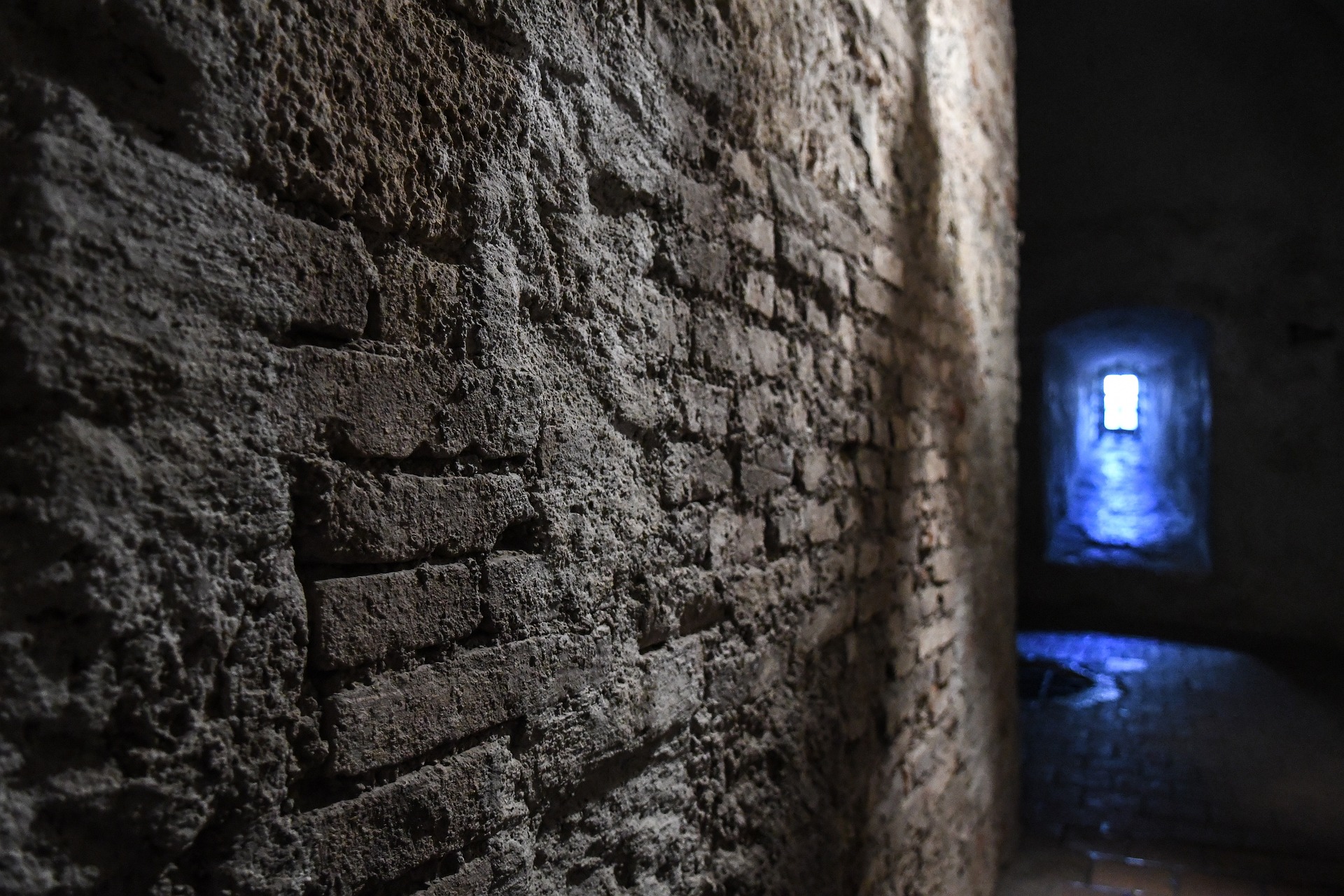
I could self-publish, but it can be an expensive and grueling process for a mere peasant like myself. Some small publishers take queries from unagented authors, but again I find myself in the dungeon of waiting. As time passes like dripping water down the stone walls, the lack of answer becomes the answer.

There is a bright spot in the dark and damp. My critique groups. While there are readers eager to embrace your character’s struggle, authors will keep on writing.

Even in the dark, even when all seems lost.

Authors create stories and readers give them life.

The retreat that pushed me forward

Attending my first in-person writing retreat after the pandemic was like a dream. The Society of Children’s Book Writers and Illustrators had been forced to hold virtual events for the past two years. This year we were back. A few weeks ago, twenty-five writers, editors, and agents met in the San Jacinto Mountains face to face.

We slept in tiny cabins at Tahquitz Pines Conference Center in Idyllwild, California. Our meetings were held at a lodge nestled in the tall trees. The weather was perfect for hiking, 70s in the daytime, 50s at night. Meals were served in a cafeteria. Staying there evoked memories of childhood summer camp.

During four magical days, I fellowshipped with other writers. Real people like me who sit in front of a computer and type out stories. A few still wore masks, a lingering reminder of the past two years. At first, it felt awkward sitting and talking to people, but as days passed, it seemed like COVID never happened.

The days leading up to the retreat, I was terrified. I was bringing a brand-new story to my critique sessions, raw in its first draft. During Zoom critiques, I could turn off my camera if I didn’t want anyone to see my reactions.  Now I sat at a round table under the gaze of six other writers and an editor. Nowhere to hide. Then I noticed everyone else seemed a little nervous, too. We were all eager to share our work yet afraid it was not enough.

Once we started, it grew easier. We became invested in each other’s characters. We celebrated beautiful imagery and clever dialogue. We discussed how the story could be improved.

Outside the four critique sessions, we had time to stretch our socialization legs. Some worked on revisions in the lodge. Others hiked the forest around us. A few rested in their cabins.

We ate together. We shared. We laughed.

We highlighted. We questioned. We encouraged.

And when our days were completed, I drove back down the mountain to my normal life. Not alone revising my story for the tenth time, but part of a supportive group that lifts me up above the silent negativity that slays books before they’re written.

That’s how a retreat can push you forward.

The Reluctant Writer- a cautionary tale

Photo by Lisa on Pexels.com

“I’ll write that book someday,” she said after sharing her story with friends over coffee.

“You really should,” they agreed.

Years went by. Her work was busy. The kids had sports. The laundry basket was overflowing.

“You should write a book about that,” her husband said when she shared her story over a glass of wine.

“I know, but this week we’ve got to get ready for camping.” She started writing her checklist for their trip.

Years went by. The kids graduated from high school. She thought there would be more time to write. Her husband got sick, so she spent her days taking him back and forth to the doctor.

I’ll write that book someday, she thought. Maybe when I retire.

Years went by. Her husband got better. The kids had their own kids. Both she and her husband retired. She thought there would be more time to write but her kids needed someone to babysit the grandkids.

I’ll write that book someday, she thought. Now I have all the time in the world.

Years went by. The grandkids went to school. Her husband passed away. Her eyes grew weak, and her hands hurt. It was hard to type on her laptop.

I will write this book, she thought. And even when it was hard to focus beyond her pain, she wrote and wrote and wrote.

Years went by. When she finally held the finished novel in her trembling hands, she couldn’t even read the words on the pages.

But she was full of joy because she finally wrote the book.

Blog at WordPress.com.

Up ↑