The writing retreat

At the beginning of May, I attended a writing retreat up in the mountains of Southern California. Tahquitz Pines in Idyllwild, once a youth camp, has been refashioned into a wedding/resort destination. Its cabins, bunkhouses, and lodges still whisper echoes of Christian songs and children’s laughter.

The writing retreat is put on by the Southern California chapter of the Society of Children’s Book Writers and Illustrators. A small group of authors who write middle grade and young adult fiction work in critique groups to improve their stories. Two literary agents and editors give their insights as part of the groups. In addition, attendees get one on one time with one of the industry professionals. Written critiques were purchased separately and given to the writers before the retreat. Time is set aside during the three day retreat for revision and writing time.

All of this sounds like a lot of work. But there were plenty of social activities. There were team building exercises, yoga, hikes, a pizza party by the fire pits, and a game night. Some writers went into the quaint town of Idyllwild to get stronger coffee or visit the bakery.

My favorite part was hanging out with other writers. Most of them don’t live near me, and the only time I see them in person is when we have our fall conference and this retreat. Being a writer means spending time in solitude and dealing with rejection. Sharing my stories with other writers encourages me to work harder. Spending time with other writers reminds me that we are all in this together. We can celebrate our writer friends’ victories and commiserate about the slow grinding machine of publishing.

When I come down from the mountains, my vision for my writing is clearer. Revising my stories seems less daunting. My words flow like Strawberry Creek, the rushing stream that runs through Idyllwild. I am encouraged and refreshed, ready to press on.

If you are a writer, I hope you take the opportunity to go to a writing retreat. In a world full of rejection, your writing family can be the hug you desperately need.

Plans

My life was overflowing with tasks and errands. My husband and I were looking forward to getting away on a Harley overnighter weekend with old friends. We put a new windshield on Stoker, our Harley trike. He checked the tires. We both washed it. Our overnight luggage was packed. The weather looked like it was going to be perfect.

The morning of our trip, I got up early and made breakfast. I got dressed in part of my layers for the morning chill. When it was time for my husband to wake up, he told me about his horrible headache. We had to cancel. I texted our friends to let them know not to wait for us.

If you believe in God, you’d probably remind me God is in control. His plan was for us to miss our Harley trip. I trust God with my life, but that doesn’t mean I wasn’t disappointed. In that moment, I was crushed. In the Bible, Proverbs 19:21 says, “Many are the plans in the mind of a man, but it is the purpose of the Lord that will stand.”

My husband and I spent a quiet weekend together. It was perfect. We watched movies and talked. His headache got better. My creativity was recharged so I could work on my new book. It was the weekend we needed, not the weekend we had planned.

When I retired from teaching almost four years ago, I thought my book would find a publisher within the first year, and I’d be busy working with editors and planning my book launch. Within the first two years, I did sign with an agent, but still waiting on my book deal. That doesn’t stop me from reading craft books, going to writers conferences, and writing new books.

I have been given the gift of writing. Part of my purpose is to nurture that gift. I write children’s books to shine a light on truth so that future generations will find their way. I have no control over the publishing industry or any timing on my writing career. Unless I self-publish, I can’t plan when my book comes out. The only thing I can do is write.

There are many aspects of our lives we can plan. We can plan where to live, whether to marry, what type of career to pursue. But there are other events we would never plan like losing a job, losing a spouse, illness, and time of our death. I want to walk confidently through the events set before me, knowing behind it all is a greater plan than I could ever understand.

And I still make plans and fill my calendar, remembering that they are only written in pencil.

The quiet creative zone or what happens after you sign with an agent

For the last eight years, one of my writing goals has been to find a literary agent. Last October, in a surreal moment on my birthday, I got “the call.” Actually, in our post COVID world, it was a request for a Microsoft Teams virtual meeting.

It was really happening.

At the meeting, we talked about ourselves, our dreams, my book. Then Tia Mele made me an offer of representation. Because I still had my book out with other agents, I told her I’d get back to her after I notified them.

After I’d received prompt responses from the other agents, I made my decision. In October 2023, I became an agented author.

I went through two rounds of editing, and then Tia created a Google spreadsheet with the publishers she was sending my book to, similar to my querying spreadsheet. But my querying was done.

Now it was my agent’s turn.

After spending years researching agents, revising my query, synopsis, and pitch, it was someone else’s responsibility.

Now I was free to focus on my writing. At first, it felt weird. Like I should be doing something. In the back of my mind, I realize it’s the calm before the editing storm. But it feels good to take a breath and have more creative time.

If you’re still in the querying trenches, take heart. With a lot of hard work and a little courage, you will find the right person to champion your work.

Why Rejection Makes You a Better Writer

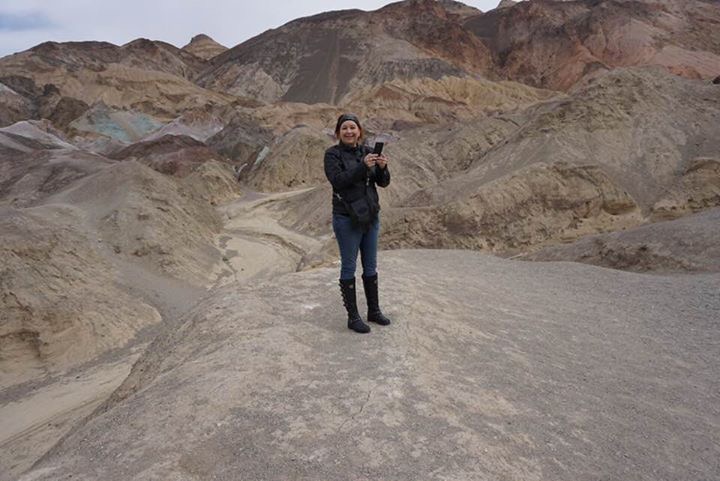
Death ValleyJodi

After a few weeks querying agents for my YA book, I needed to take a break and consider my progress. One agent, who I met and worked with in a critique group, sent me a personal rejection the same day I emailed her. Another agent, who loved the book at a retreat, sent me back her regrets. In prior years, with prior books, I would get no rejection letter at all. Only silence. Compared to no response, my recent rejections have led me to be more optimistic.

So I decided to make a list of how agent (and magazine editor) rejections have improved my writing:

  1. Book rejections make you realize that you need feedback on your writing before you send it out to agents.

 When I began my writer’s journey, I finished my rough draft and thought I had a masterpiece. I read a little of it to my friends, but I was sure that it was finished. Now I enlist the aid of critique groups, professional editors (not as expensive as you would think), writing retreats, and college extension classes before I send anything out.

  1. Agents have their own agendas.

They actually have to sell your book to publishers, who are even more jaded than they are. Agents have categories of books that they represent. If they already have enough magic books, they won’t be interested in your fantasy project. The lesson here is keep querying. You just haven’t met your agent yet.

  1. Being rejected by agents can lead to personal growth in your writing.

After getting several rejections on a book, I looked at all the comments that accompanied the passes. Agents are busy people, and if they take the time to tell me what they didn’t like about my work, I need to pay attention. This has led me to take writing classes at UCLA Extension, which I highly recommend. I also began submitting short stories to magazines so I could beef up my publishing credits.

  1. I appreciate all the hard work that goes into the books I read.

I read all the acknowledgments at the back of the novels I read, and count the number of people the author thanks. Have I exposed my WIP to that many people? Also, I was encouraged by an writer that had the courage to admit she had 17 novels rejected before she was published. Therefore, I need to stop my whining.

  1. Rejection makes me recommit to writing.

As the years pass, it would be easy to turn off the laptop and do something else with tangible results, like knitting. Writing is easy, revision is hard, traditional publishing seems nearly impossible. However, I’ve overcome many impossibilities in my life, and I’m not ready to die to my dreams yet. Rejection shows me that I haven’t reached that mountain peak— I’m still in the foothills. I need to keep walking.

  1. Rejection initiates me into the writing community.

All writers experience rejection at some time, and they can be a great source of encouragement to other writers. Joining Twitter and following other writers allows me to share in their joy and pain along the publishing path. Thanks, guys.


As you can see, rejection is not as negative as the gut punch you feel at first when you open that agent’s email reply. You get mad, cry a little, eat chocolate, drink a large glass of wine, and get back to work. And hopefully, after a lot more work, someday we’ll be sitting by the pool reading each other’s novels instead of this blog.

My first pitch at a writing conference

nature-photos-flowers-and-wallpapers-13

Last Saturday was the Society of Children’s Book Writers and Illustrators Editors Day at Cal State Fullerton. I was excited to hear presentations from the kind of people who would eventually decide the fate of my book. Over the past months I had attended conferences with advice from successful writers that was very practical. But they aren’t publishers.

What do editors and agents really think about writers? I’ve heard horror stories, although my personal experience has been the silence of unanswered queries or generic electronic rejections. Neither of which causes improvement in my writing.

When I received my name tag, my heart stopped when I saw the appointment time for my pitch session with an agent. When did I sign up for a pitch session? I never prepared for a pitch session. All day long, my hands shook as I scribbled notes from the various speakers. Some of the writers won the privilege of sitting with an editor or agent for lunch. However I was not, but later was grateful when my sandwich was spilling over with cream cheese and cranberries. I barely managed to eat it without wearing it for the rest of the day. And I had the opportunity to meet another blooming writer who was just starting down the path.

Much later, in the sleepy hours of the afternoon, it was my turn to walk down the hallway to the small door, and sit down next to the other rustling victims waiting for their turn. A much too cheerful well dressed lady asked my name and checked me off the list.

Then I sat, waiting.

Finally, the group before mine came out, and I noticed that no one was sniffling. I took it as a good omen as I walked in the door.

My interrogator, I mean agent, was a smiling woman with large glasses that made her appear as a young owl. We shook hands, and my story began. What started as an elevator pitch became a complete synopsis, encouraged by her questions. Even though I was a bit rattled, she encouraged me by sincerely seeking to understand my characters and their journey. She made astonishing suggestions that gave me a new perspective on my project. I never felt at any time that she would tell me to stop writing and do something productive with my life.

When I rejoined my newly met companions back in the lecture hall, I couldn’t stop smiling or writing down notes from my interview as fast as I could. It was all I could do to remain in my seat, not jumping up to return home and start making changes to my manuscript immediately. Why had I been so frightened? My new agent friend cared as deeply as I did about stories. Apparently that was the reason she worked in the publishing industry.

Writing needs feedback to grow just as flowers need water to flourish.

Blog at WordPress.com.

Up ↑