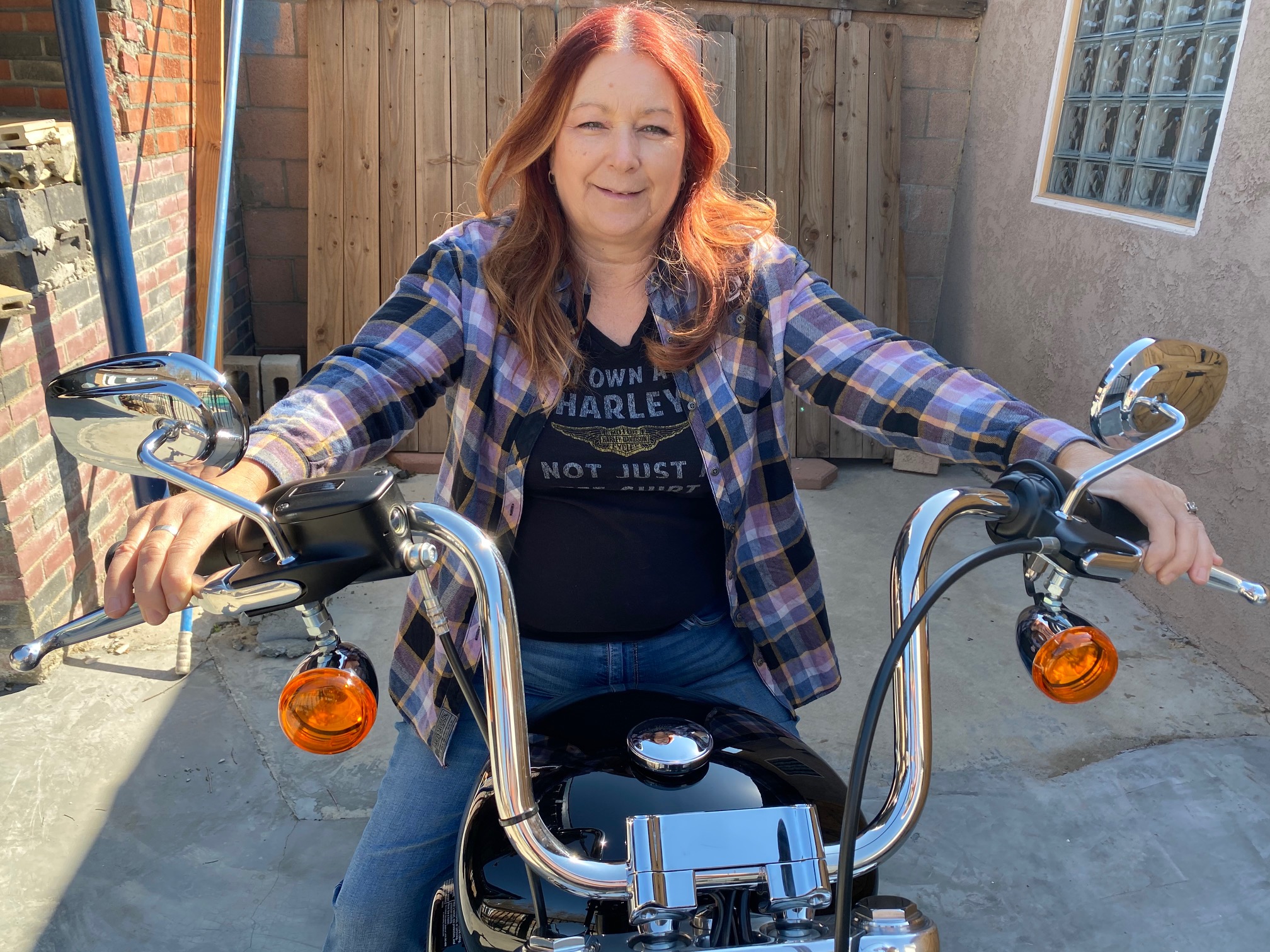
Writer of children's books and rider of Harleys, you'll find me huddled over my laptop or exploring back roads with my husband on our Freewheeler or Breakout. My tribe is the SoCal region SCBWI. We also enjoy year-round camping in Southern California with our two dogs, Harley and Davey (Davidson).
Pumpkin spice lattes are back. Halloween decorations dominate the craft stores. And in Southern California, it’s extended summer. Especially for teachers like me who jumped ship at the end of last school year. This is the first year I didn’t spend days setting up my classroom, organizing classroom supplies, and suffering through hours of staff meetings.
Next week, instead of sweating through triple-digit days sequestered inside with kids, my husband and I will be camping at the beach. We’ll walk our dogs, grill steaks, and watch the sunsets. I’m going to work on my latest book project until I run out of power on my laptop.
After 17 years of teaching (which in teacher years is 170), I’m writing a new chapter in my life. In my first years at college, I poured all my energy into being a visual artist. Then at graduation I was cast adrift in a world where creatives had few ways of earning a living. I went to work in retail buying, using my creativity to select season colors and magazine layouts.
After 9/11, I lost my job and became a substitute teacher. Then my husband died, and suddenly I was a single parent of three school age children. That led me back to college where I earned my teaching credential.
Writing children’s books was my new creative outlet. Seven years later, I found a husband that nourished my dreams. I joined writing groups and took classes. My obsession grew until I was up every morning at 5:00 am to squeeze in a few hours of writing before the day began.
Many years passed. My kids grew up and set out on their own journeys. Teaching kids taught me a lot. About hope for the future, and a passion for doing what you love. I gathered characters and stories like shells on a beach. Saving them for when I had time to write.
So here I am in my first year of retirement. Living life as a full time creative, writing instead of making art. My life is no longer fractured with conflicting responsibilities. I still get up early. Ideas flow in the quiet time before the day opens its eyes.
As I fall into more summer, more summer flows into me.
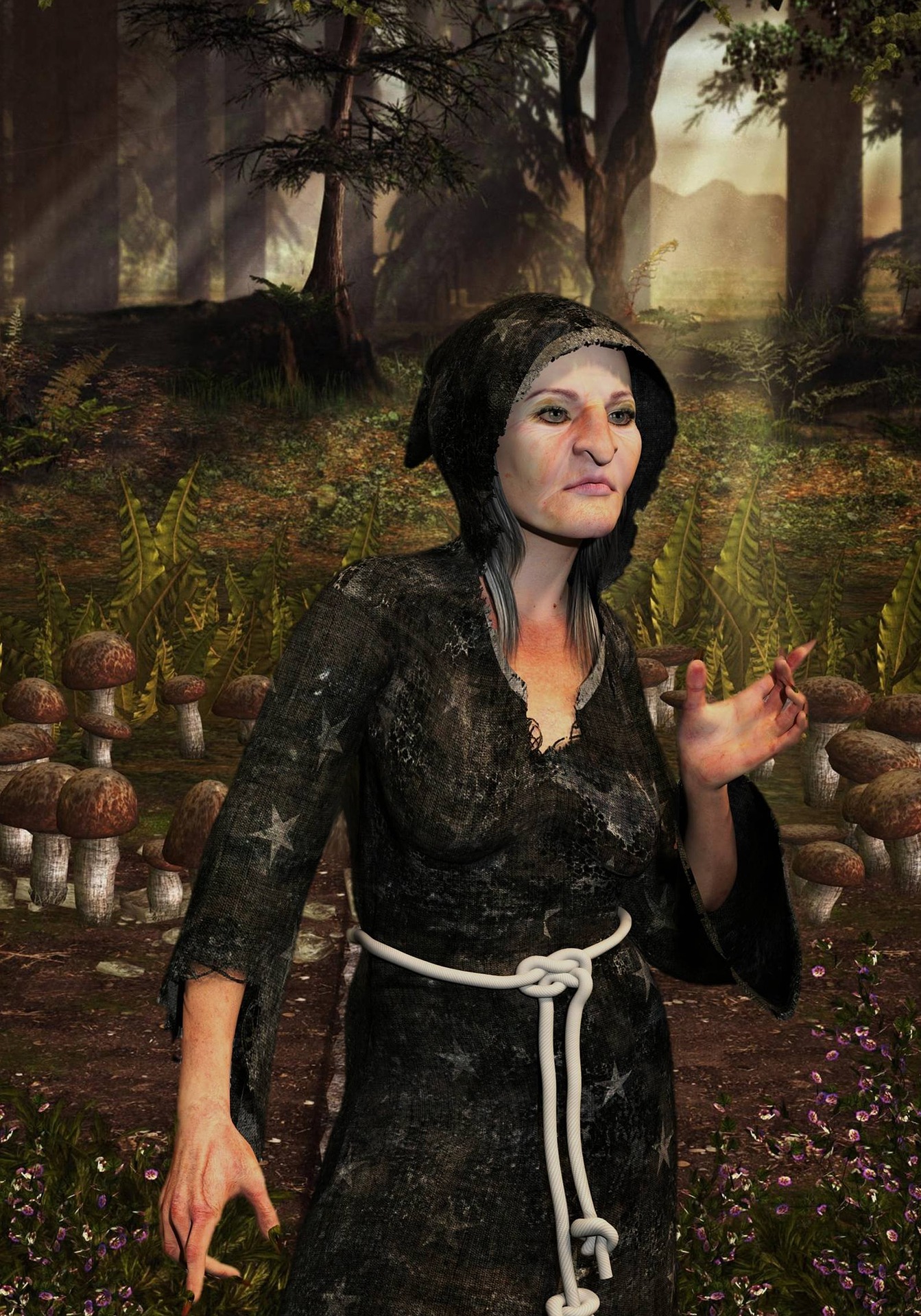
Her magic was failing, and there was nothing she could do about it. It was her fate. When you were over three hundred years old, something was bound to wear out.
The witch knew this with her brain, but her heart still grieved. Magic had been her companion through broken hearts, wars, and witch hunts. Over many long years, she had loved and lost friends and familiars, but magic had remained a constant hum underneath her skin. Now it was a faint whisper.
The witch steam mopped her kitchen floor, her long tangled white hair hanging in her face. She took her time, making sure to get all the blood in the grout. Living in these times was a lot easier than when she first crossed the ocean. Back then, she lived in a dirt floor hut outside the village. It was convenient to have her own animals for spells, but her city condo these days smelled a lot better. And she could order the animals she needed from Amazon.
After she tucked her steam mop away in the closet, she turned her cleaning energy to her bathrooms. Her three-bedroom condo had two of them, a luxury unheard of when she first came to this country. She sprayed her natural cleaner on the toilet and sink and scrubbed with what strength she still possessed. As she wiped down the mirror, she avoided looking at her reflection. That shriveled up crone was a stranger to her. If her magic was strong, she would be able to smooth those wrinkles with a potion.
If her magic was strong, she wouldn’t have to work like a cleaning lady. She used to be able to mumble a few words and her home would be sparkling clean. These were humbling days when she needed to save her magic for the big things.
Spells that used to spill off her tongue now sputtered and failed. Last week, she used her scry bowl to see what her sister witch, Agnes, was doing. The water refused to show her anything. In her anger, she tossed the ancient ceramic bowl across the room. It shattered on the tile floor. She had to FaceTime with her instead.
Losing her magic made her so angry she wanted to transform into a bird and fly away. Usually, anger amplified her power. Now when she spoke the spell, all she got were a few feathers and a sudden urge to eat granola.
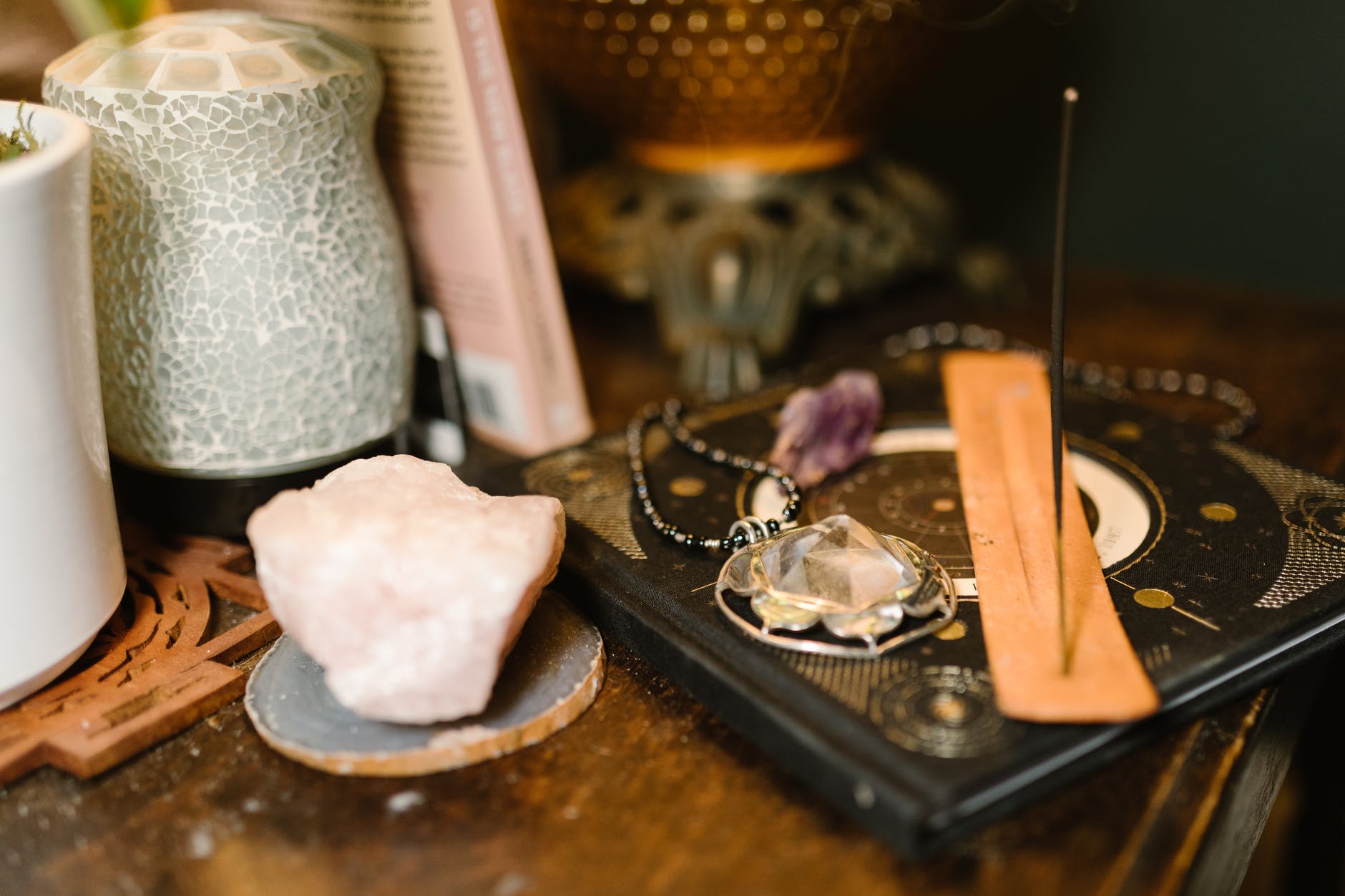
When the bathroom was clean, the witch turned her attention to the shelves in her work room. The small room, formerly one of the bedrooms, had one whole wall covered in wooden bookshelves, mismatched and of different finishes. Jars lined the shelves, some filled with liquids while others held dried plants. Using a microfiber cloth, she lifted each one and wiped it before returning it to its place. This took a long time. She needed to be careful as some of her ingredients were volatile in combination with others.
A tear rolled down her gnarled cheek. Most of these jars would never be used again. Maybe she could sell them to a younger witch.
Weakness overcame her, and she had to sit down at her desk. What would be left without her magic? An ancient crone, powerless and friendless. How could she live without her craft?
She glanced down at her phone on the desk. Maybe she was allowing her circumstances to overwhelm her. She still had sister witches who cared about her. Maybe her magic just needed to be recharged like her phone.
There was power in mingling magics. How could she have forgotten? She reached her trembling hand to grasp her phone. She scrolled through her contacts and clicked the phone symbol.
There is a delightfully disturbing book titled Little, Big by John Crowley. It tells the tale of a man drawn into a family that deals with fairies. Fairies are often referred to as the Little People.
One of the characters remarks that her world was big but became little. She used to travel, entertain, take care of her children. Her life was big. Then it changed. She stayed home in the country, her children grew up and started their own lives. Her life was little.
My world shrank as well. My husband and I used to travel often on our Harley and in our motorhome. We flew across the country to visit our kids. We spent a week in Hawaii for our anniversary. We entertained and visited friends often. Our world was big.
Then my husband’s auto-immune disease worsened. COVID 19 arrived. I decided to retire early from teaching to write children’s books full time.
Of course, during the quarantine, my world was little. For days, our car sat in the driveway collecting tree sap. We spent the days moving from room to room in our small home before ending up in the backyard. We visited family online.
Even after my husband and I were vaccinated and some of the restrictions lifted, I didn’t have many reasons to leave my house. I got used to having my groceries delivered. I got used to shopping on Amazon. I worked with my critique group on Zoom.
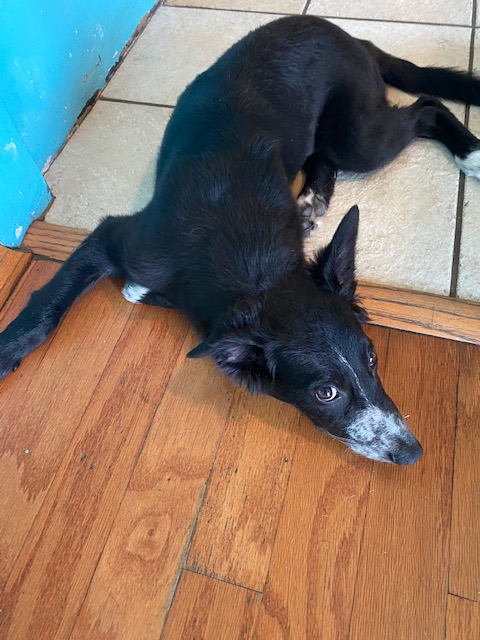
In this new little life, I was available. I could help my husband with projects around the house. I could help my daughter take care of her preemie twins. I could spend time training our border collie puppy. I could call friends and encourage them in these chaotic times.
Maybe that’s the way life was designed. First we’re big, and then we’re little. To quote Tolkien “even the littlest person can change the course of the future.”
“We’ll throw you a big party with cake and everything,” my boss said, her fake smile lost in the maze of her wrinkles.
“But I’m not ready to retire,” I said. I pointed at my overflowing inbox. “I have all these orders to fill.”
Headwitch Hazel frowned. “Another reason for you to step down. Your productivity is atrocious!” She towered over me with her arms folded, not difficult to do since I was still sitting at my desk.
I sighed. “I’ll do my best to finish my outstanding requests by Friday then.”
“You do that,” she said, and stomped back to her office.
“Hey, Puddle, wanna go to lunch with us? We’re going to Chilis,” Thistle said, coming back from the front office with a fresh batch of orders in her hand. She sat across from me, our desks touching each other. If I left the company, I would miss her management jokes.
Still feeling the Headwitch’s glare, I answered, “Not today. I’ve got to get caught up.” She grabbed her broom and rushed out the door to catch up with the others.
A giant boulder of anxiety pinned me to my desk. What was I going to do with myself without this job? When I was here, I didn’t have to think. I just filled orders, took my breaks, and clocked out at the end of the day. No risks. No magical disasters.
Now I would be on my own.
Trying to shake myself out of it, I dumped out my inbox and sorted the orders into categories. Love potions, wrinkle reducers (surprised the Headwitch didn’t cast that spell for herself), protection charms, wisdom hats, and garden pest removals. Not exactly the magic I thought I’d be casting when I finished magic school.
How did I end up in this dreary magic office, when I could have been in the queen’s army, on the front lines, casting huge wind or storm spells that changed the course of battles? Or assigned to a noble family, protecting their castle from intruders.
If I admitted it to myself, I knew how I ended up here. Every time I had big magic to cast, I choked. During finals week, several of my test spells failed. At my potions final, my brew turned into iced coffee instead of a sleeping draught. My face turned beet red in front of my teacher, who knew I had made it successfully during our practice sessions. Then came my weather control final where I ended up flooding the testing room. I don’t even want to remember my broom driving test, but I still have the scars.
With my abysmal magic school scores, I was lucky to gain a position with A Magical Solution, a magical company that specialized in small magics that most witches didn’t want to waste their power on. I made charms and potions in a small lab I shared with other unremarkable witches. Our meager efforts were then sent off to the shipping department where they wrapped and packed them carefully and sent them out to customers.
Now after thirty years of small magic, it was time for me to move on.
After I’d taken care of huge stack of beauty treatments, Thistle poured in with the other witches and laid her broom on the rack against the wall. She plopped down at her desk and stared me down with her piercing green eyes. “You’re really retiring? It was all the girls talked about at lunch.”
“Headwitch said the company changed their retirement age. I’m only 80. Normally I’d have until I was 85, but apparently, they want to get new blood in here. Immediately. Friday’s my last day.”
Thistle jumped up and gave me a bone-crunching hug. “Oh, Puddle! I’m going to miss you so much. Whenever I got stuck on a spell, you always had the answer. And you laugh at my jokes.”
“I’ll miss you, too,” I said, putting on a brave face while my stomach was flipping.
There had to be something I could do with my life. I looked at the towering piles of papers on my desk and sighed. If only I could come up with a way to be useful.
Finally Friday came, and it was time for me to say good bye to my desk and my co-workers. Headwitch Hazel had sprung for a delicious strawberries and cream cake and pink punch. At 4:45 pm, she allowed us time on the clock to celebrate my eminent departure.
“Speech! Speech!” the witches cried, guzzling down the punch which may have had an intoxication spell added.
I cleared my throat and thrust my shaking hands in my pockets. I hated speaking in front of a crowd, but these were witches I’d seen every day for most of my life. “Thanks, everyone, for your kind words,” I said. “I’ve been with the company for a long time. If I never see another desperation love spell, I would be happy.”
A chuckle echoed across the office. No one liked to cast that spell, especially since it included dog feces and stinging nettles.
“It’s hard for me to say goodbye to all you wonderful witches,” I continued. “When I heard I was retiring, I was upset. I hate change. That’s probably why I stayed here all these years. But Headwitch Hazel has given me a new opportunity. An open door to the new stage of my life. When I was young, I was too afraid to make mistakes. Now I’m ready to use my experience to cast new magic. I may still make mistakes, but I will learn from them. It’s time for me to step out on my own.”
“What are your plans?” Poppy from Accounting asked.
I took a deep breath. “I’ve been thinking about it all week. I could start a bed and breakfast at the beach. Or I could become a wise woman in the forest. But I know what I really want to do.” I paused. Headwitch would not like this. “I’m going to write a book.”
“A grimoire?” Thistle asked.
“Not exactly,” I said. “A grimoire is for my own personal use, to be handed down to my children, of which I have none. I’m going to write a magic book that every witch can use. A book of everyday, small magics that can make their lives easier.”
Headwitch frowned. “You mean like the spells we do here at the company.”
I nodded, swallowing my fear. “Too long have young witches ordered out spells and potions that their mothers and grandmothers always made themselves. They shouldn’t have to pay for milk preservation spells or anti-wrinkle treatments for their clothes. Witches have become lazy in their magic. It’s time for them to take back their heritage.”
Although it would affect their jobs, the witches in the room cheered. My hopes soared as I realized I was finally ready to cast big magic of my own.
The strangest part of driving a 30-foot Class C motorhome is you can’t see anything in the rear-view mirror. In fact, the rear-view mirror is a backup camera that only comes on when you’re in reverse gear.
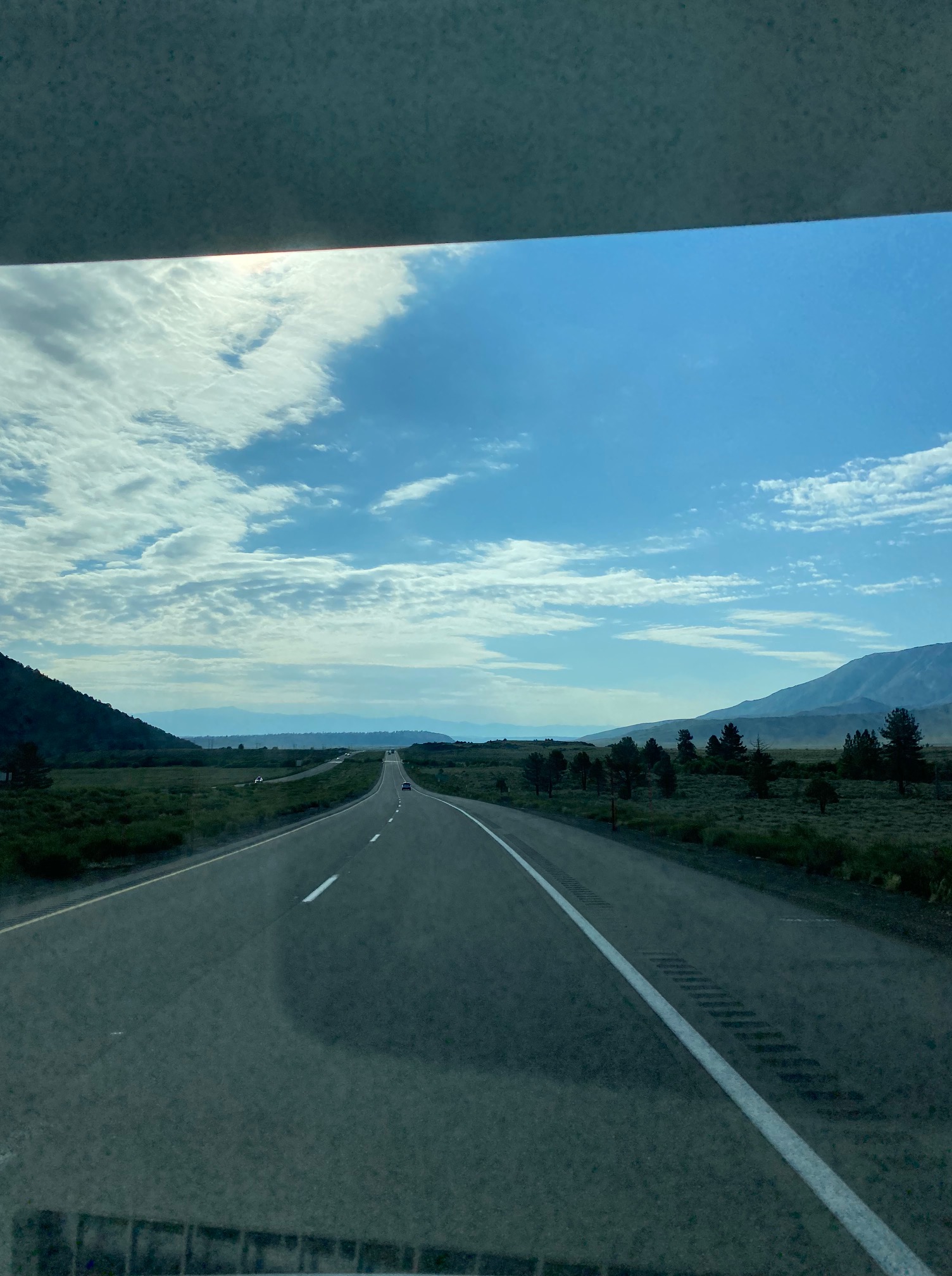
As I took my turn driving down Highway 395 toward Mammoth Lakes, I readjusted the huge side mirrors and the driver’s seat. This was only my fourth time driving the rig. Including the mirrors, our rig was over eight feet wide which can make you feel squished into your lane. But the road we currently traveled was wide with a shoulder, so I smiled at my husband as he headed to the bedroom for a nap.
It was just me and the highway.
Just like he taught me, I shifted my eyes from side mirror to ahead to other side mirror to check my lane position. My hands were a little damp on the steering wheel. This thing was so big! Not as big as a bus-sized motorhome that cost as much as our house, but much larger than my Tundra pickup.
As I rolled down the highway, two challenges emerged. First was keeping my big butt in the lane, even as the wind bumped me from time to time. Second were the hills.
When you’re in a car, you don’t notice the hills as much. Our Corolla zipped up and down the mountains on the way to San Diego like it was motocross. But for a thirty-foot monstrosity, hills take a little planning.
As I spotted an incline in the distance, I reluctantly pushed the speedometer up to 70 mph. At this speed, our rig started to feel like a small boat in choppy waters, so I gripped the steering wheel. When I reached the hill, my speed would start to drop, and the tachometer would start flipping numbers quickly. I divided my attention between the tach and the road, trying to keep the rig within reasonable stress on the motor. Finally, I reached the peak of the hill and could shake out my shoulders.
Until the next hill. Which came soon, as we were steadily climbing into the Sierra mountains.
Hours flew by. As I settled into the routine, I realized that driving the rig could be a metaphor for life. Instead of being able to look at my past directly while I was looking ahead, I had to give side glances at it instead. I had to pay more attention to where I was in my own lane, or life, than looking at others. Looking at the road in front of me and ahead was more important than what was behind. Focus on what I could do now and not past failures.
As I glance at clothes draped over the chair, bags on the kitchen table, and my long list on the counter, I consider that it takes a great deal of energy to relax.
Camping is my reset button.
My husband and I get out every month in our C-class motorhome to spend some time at the beach or in the mountains. Sometimes we set up at campgrounds that have full hookups (electricity, water, sewer) and sometimes we use state or federal campgrounds that only provide a picnic table and a campfire ring. Either works for us, as we don’t watch TV or use electronics very much when we are away.
We love to walk our dogs, Harley and Davidson, around the camp or into the woods. Other times, we kick back on our zero gravity chairs at our campsite and talk. I have outlined a novel and a few plays during those conversations. We’ve also brainstormed two names for motorcycles. No chores, no errands.
As relaxing as camping can be, it takes a lot to get there. Cleaning and prepping the motorhome. Packing it with groceries, water, clothes, dog supplies, and medications.
Every camping trip we usually forget something, so it’s my job to make sure the forgotten item is not essential. We have forgotten pillows, toothbrushes, shirts, flip flops, and bread. My all-inclusive packing list, which seems to grow longer with each excursion, attempts to prevent these mistakes.
Packing the motorhome can take up to a week, sometimes longer than the camping trip itself. Fortunately, our rig is parking in our backyard which allows us access at any time. Several times a day, I carry armfuls of essential items into the rig and find places to stash them. Surprising how much stuff we can fit into it.
The day finally arrives. The dogs are crated on the motorhome couch, we have drinks and snacks in the cab, and we pull out into the alley behind our home. We’re on the road.
When we arrive at our destination and back the motorhome into our campsite, it is all worth it. We escaped the responsibilities at home and can relax and enjoy being out in nature.
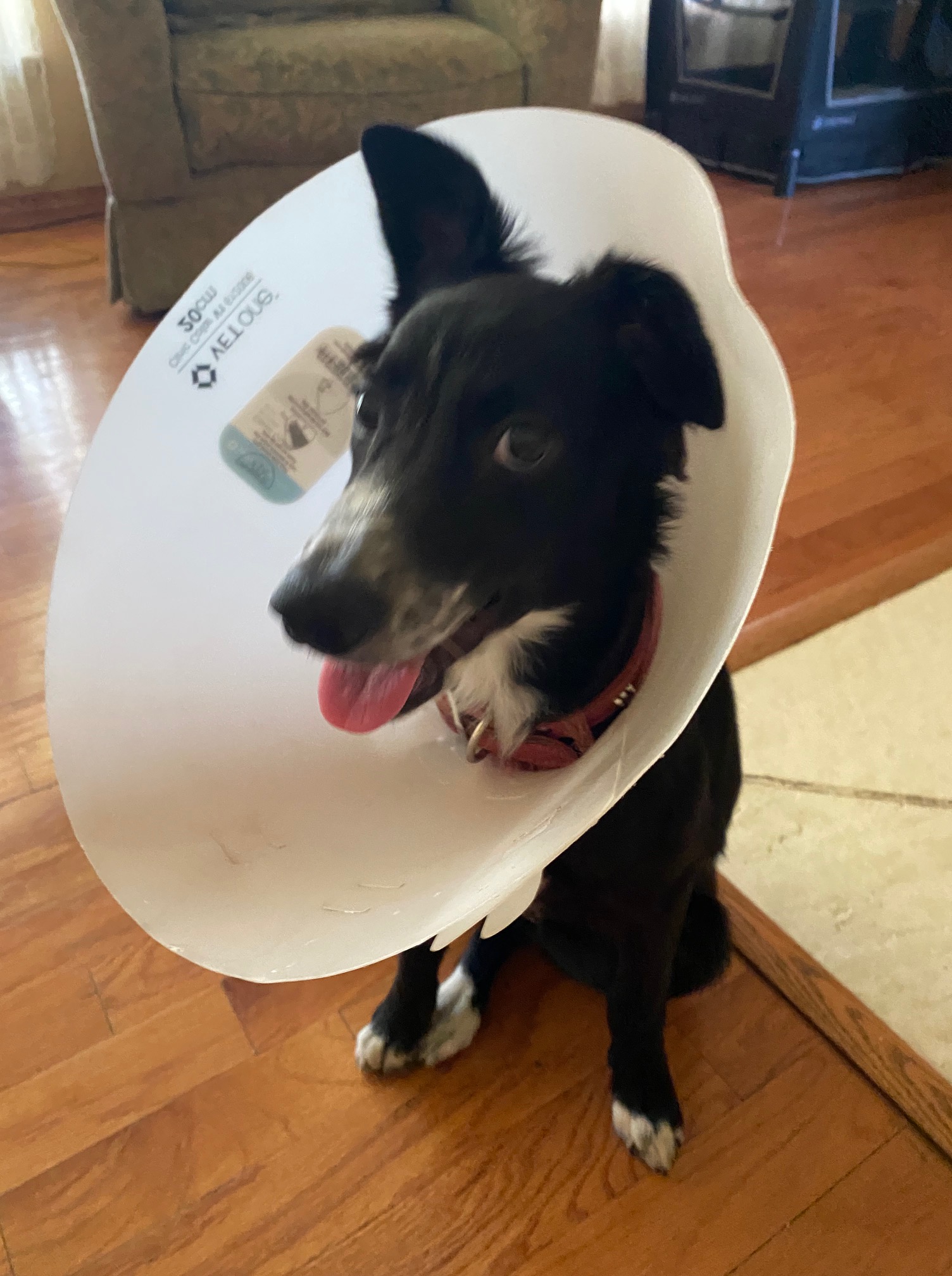
When I wake up in the cage, a plastic shield is attached to my neck. All the sounds that are usually crisp and clear are muffled now. My eyes attempt to focus on what’s going on outside my prison, but everything is reduced to blurred shapes.
Although my other senses are covered in a blanket, my nose never fails. Sharp, forest smells. Fresh pine needles. Blood, old and cleaned up but still smelling like rusty nails and rotten leaves.
A nice girl who gave me treats when I was brought in opens the cage door. I try to wag my tail, but it feels disconnected. She snaps on my collar and takes me into her arms. A dull ache cuts through the cloud.
“Yip!” I protest.
“It’s okay, Davey. Your mom is here to get you,” she assures me. Slowly she lowers me to the floor. I feel a slight tug at my neck. Last week I learned that means I must walk beside whatever human is closest to me.
I take a step and stop. I can’t see my feet! The plastic cone flares out from my neck and prevents from seeing anything except what is in front of me. I plop down, ignoring the pull on my neck. This does not seem safe.
“Come, Davey. Let’s go home,” my beloved mommy says. Because I trust her, and she feeds and kisses me every day, I let her lead me out to the car.She won’t let me bump into anything. She lifts me up to the back seat. I feel so tired I fall asleep.
Next time I wake up, my senses are back to normal. I can see the wood floor that’s so good for chewing and smell my mommy’s food in the kitchen. I start to run around the room, but the plastic cone bounces off the couch, the tables, and the wall. I sit down in frustration.
My bottom starts to itch so I try to take care of it like I always do. The cone’s in the way! What kind of devilish torture is this? If this is my punishment for chewing the wall, it’s too extreme. I thought my mommy and daddy loved me! Just like Harley said, they love her more than me. Harley is a beagle and three years older than me, so she always thinks she knows everything. She doesn’t have to wear a cone!
“It’s okay, Davey,” my mommy scratched behind my ears in the right place where only she knows. I’m so thankful because I have no way to scratch myself. “It’s only for a few days.”
What do I know about a few days? This is now, and it’s terrible.
“Come on, let’s go outside to go pee pee,” my mommy says.
Easier said than done. I crash into the side of the door, smack my cone repeatedly on the metal fence, and finally sit down on the grass, grateful I didn’t fall into the pool along the way.
How do you pee when you can’t aim? I try peeing sitting down and end up drenching my front legs. I try to lick them clean, but the cone stops me again. Harley’s growling at me from the far end of the yard. This is so embarrassing!
Harley used to be my best friend and play with me every day. She showed me all the best places in the yard to dig and how to eat the hibiscus flowers. Ever since I came home with the cone, she runs away in terror.
I’ve been made into a monster!
Just when I think it can’t get worse, it’s time for my dinner. My best mommy in the world set down my dish and says, “Wait.”
I don’t know why I have wait for my food when humans sit down and eat their food right away. But I wait anyway. You never know when a treat might be involved.
“Go ahead.” I put my head down to eat, and the cone crashes with the floor. I can still reach my food, but it’s like I’m in a plastic tent. Not such a bad thing since that means Harley can’t reach in and steal my food.
Finally it’s time for night-night time. Instead of inside my comfy crate, I have to sleep on the laundry room floor. Harley stares at me with suspicion from inside her crate, growling softly.
As I lay flat on the hard tile floor, I try to relax. Ever since my mommy and daddy brought me home, they’ve given me only good things. I need to trust them even though I don’t understand. As I drift off into puppy dreams, I pray that I’ll wake up tomorrow and the plastic cone will be gone.
Inland Southern California has an inverse winter. In less temperate areas, like the Midwest where I grew up, you have to spend a lot of time indoors for at least four months a year due to freezing temperatures and snow. In a similar way, inland So Cal has three months in the summer where triple digit days force us into the safety of our airconditioned homes.
For Californians, who consider being outside our “family room” and “dining room,” this can seem very confining. Fortunately, we can escape to the beach or the mountains. But braving the traffic on the freeways is not always appealing.
My escape is our swimming pool. As an elementary teacher, I have summers off and can enjoy it daily. Our pool is a refuge after errands and housework. A planning room for my husband and me. A playground for our grandkids. A hangout for friends and relatives. When my kids were young, we would roll out our big screen TV outside the back door and watch movies from the pool in the evening.
When we get a string of days over 100 degrees, you’ll find me floating on my lounge chair, ice tea in the cupholder, and my waterproof Kindle in my hand. That’s how I spend my “winter.”
When we bought our cute little border collie puppy, we didn’t expect to bring home a thief.
The first day Davidson hid under the furniture staring at us with suspicion. After our recent experience with Harley, our three-year-old beagle, we knew we would have to “puppy proof” the house. When Harley was a puppy, she trimmed all our backyard plants down to the roots and chewed through our internet cable.
So this time we thought we were smart puppy parents. We bought bags of chew toys and treats. We barricaded Davidson into approved areas of the house. We started crate training the moment we brought him home. He was potty trained by three months, and caught on to our house rules quickly.
What we didn’t know was our new puppy was a kleptomaniac. He stole shoes, towels, lip balm, coasters, and empty (thank goodness!) prescription bottles. He performed his first magic trick by removing the tablecloth from the table, leaving the items on the table. Well, most of the items. My phone crashed to the hardwood floor, case side down. There would have been no harm done except the salt and pepper shakers fell on my phone’s screen and cracked it.
Then my daughter brought her newborn twins over to our home. Davidson decided he liked pacifiers, and would steal them out of the car seats. He sat in the corner, next to one of his toys and chewed the nipple off them. If no pacifiers were within reach, he hijacked some of the baby clothes from a bag.
He’s a trickster. When you looked over at him, he would be sound asleep by the fireplace. While you turned your attention elsewhere, he would lope around the living room, swishing his tail, looking for what he could reach next. Forget taking off your shoes. Gone in five seconds. Don’t leave your snack on the coffee table if you want to eat it. We would correct him and give him alternative chew toys. Sometimes he got a time out. We get it.
Don’t get me wrong. Davidson’s a smart puppy that will grow up into a responsible dog member of our family. Until then, he’ll do time for his crimes and as we keep his klepto urges under control.
“I’m trying to find neutral so I can start the bike!”
Of course the training motorcycle I was assigned had a hard time shifting to neutral. I couldn’t start the bike until it was in neutral. My foot was flailing as I tried to bump the shifter up a half step. The whole class behind me was waiting.
I’m an adult. I’ve driven cars for many years, including stick shifts. Why is riding a motorcycle so complicated?
I had ridden behind my husband on our Harley for years. This was the year I was going to learn how to ride my own. I registered for the riding class at our local Harley dealership. Three days to make me a rider.
The book work wasn’t that hard. I have a Masters Degree in Teaching so I know how to study. Our first session was reviewing some of the information in the guide which included the controls, how to start and stop the bike.
There was one other woman in my class. One other adult over fifty. The remaining five students were young men with dirt bike miles. I didn’t let my inexperience freak me out as I knew all the answers in the classroom.
The next day was the range.
We met at 6:30 am at the fairgrounds parking lot. A line of small black Harleys waited in a line. Our instructors had cones placed in a mysterious pattern. For each activity, we watched one of the instructors ride it while the other explained what we had to do. Looked easy enough.
Until I tried to start the bike. Neutral eluded me many times that day, adding to my stress and frustration. During the course of five hours, I had to push all fear of failure and negative self talk out of my brain, as I only had room to focus on making my bike move.
When our instructor finally gave us the signal to park the bikes, I was soaking wet and trembling. It was time for lunch and back to the classroom.
My whole body ached when my head hit the pillow that night. The other woman in my class had already quit after the practice range. One of the young guys didn’t come back either. I didn’t have to prove myself to anyone.
I didn’t have to ride a motorcycle.
I groaned when my alarm went off the next morning. The day of our riding and written tests. Should I get up and get dressed?
When I showed up holding my helmet, my instructor raised his eyebrows but didn’t say anything. My mind was set. I was going to do this.
I got on my bike and fired it up. All I could think about was following directions, following the other riders, following my dream.
After some warmups, we completed a series of motorcycle skills for the riding test: swerves, slow turns, quick stops, street turns. The instructors scribbled on clipboards as we sped by. Then we got the signal and parked the training bikes for the last time.
My hands shook as I unbuckled and took off my helmet. My hair was plastered to my face and my makeup had disappeared hours ago.
“We need to retest one student. The rest of you passed. Go get lunch and meet back at the classroom for the written test.”
The name they called was not mine. I passed the riding test.
On my way back, I stopped at Starbucks for a cold drink and a cake pop. My mind buzzed like I’d just come out of my first Lord of the Rings movie. I knew I could pass the written test, but the riding course was the hardest thing I had ever done in my life.
Later that afternoon, the instructors passed out awards to our class. All of us who showed up the second day had passed both tests and were ready to apply for motorcycle licenses at the DMV. We’d still have to take another written test there, but after what we’d been through the past three days, it sounded simple.
The awards were light-hearted, including one for Speed Demon, Shortstop, and Curve Master. My award was not surprising.